



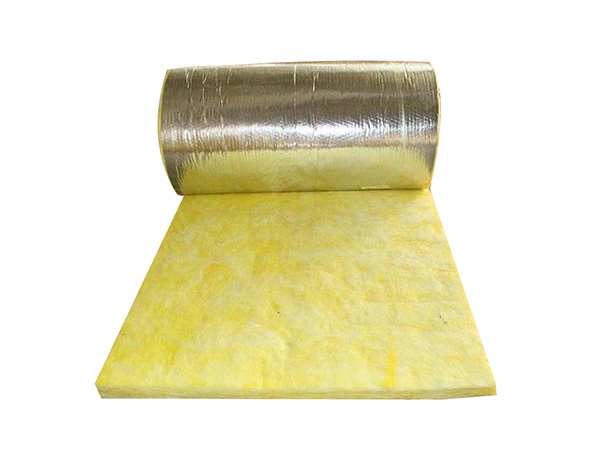
Glass Wool Blanket
Glass Wool Blanket is a flexible and roll-type core product of glass wool insulation materials, manufactured by centrifugal blowing of molten glass into fibrous form, spraying thermosetting resin, and undergoing thermal curing and rolling f...
Glass Wool Blanket is a flexible and roll-type core product of glass wool insulation materials, manufactured by centrifugal blowing of molten glass into fibrous form, spraying thermosetting resin, and undergoing thermal curing and rolling forming. It inherits all the excellent inherent properties of glass wool, with outstanding thermal insulation, sound absorption, fire resistance and hydrophobic performance, and features flexible cutting, convenient construction and wide adaptability. It is a cost-effective insulation and noise reduction material widely used in construction, industry, HVAC and other fields, and can be customized into different specifications to meet the diverse construction and application needs of various engineering projects.
Core Performance Features
Superior Thermal Insulation Performance
It has a low thermal conductivity coefficient (ranging from 0.034 to 0.050), and the loose fibrous structure forms a large number of closed air chambers, which can effectively block heat conduction and convection, and stably exert heat preservation and heat insulation effects in both high and low temperature environments. At the same time, it has low moisture absorption rate and high hydrophobicity (up to 90%), which can avoid the decline of insulation performance caused by water absorption in humid environments.
Excellent Sound Absorption & Noise Reduction
The fine and disorderly glass fiber structure can effectively absorb sound waves of different frequencies, convert sound energy into mechanical energy and dissipate it, thereby reducing noise reflection and transmission. It can significantly improve the acoustic environment of the space and is suitable for various noise reduction scenarios such as building interior and industrial workshops.
Grade A Non-combustible Fire Resistance
As an inorganic non-combustible material, it reaches the Grade A (A1) non-combustible standard for building materials. It does not burn, does not produce open fire and toxic smoke when exposed to high temperature or fire, and can effectively block the spread of fire, providing reliable fire safety protection for buildings and equipment.
Stable Physical & Chemical Properties
It has good chemical stability, is not easy to react with acids, alkalis and other chemical substances, and is corrosion-resistant and aging-resistant; its physical performance is stable, with low density and good toughness, and it is not easy to crack or break during construction and use, ensuring long-term use effect.
Environmentally Friendly & Harmless
The standard glass wool blanket is free of asbestos, formaldehyde and other harmful substances, and the environmentally friendly modified types (such as formaldehyde-free glass wool blanket) further eliminate toxic and harmful components, complying with green building standards and ensuring the health of construction and use personnel.
Main Product Types & Matching Advantages
Combined with different application scenarios, the product is derived into multiple customized types to meet professional needs:
Hydrophobic Glass Wool Blanket: With enhanced hydrophobic performance, it is suitable for outdoor, basement, pipe laying and other humid environments.
High-Temperature Glass Wool Blanket: It can withstand high temperature up to 350℃, and is specially used for thermal insulation of industrial furnaces, high-temperature pipelines and other high-temperature equipment.
Formaldehyde-Free Glass Wool Blanket: For indoor decoration, residential building ceiling and wall insulation, it prioritizes indoor air quality and health protection.
Slitted Glass Wool Blanket (Sheet Felt): Light and easy to process, it is suitable for automotive interior, small pipeline insulation and local insulation coverage of equipment.
Main Application Fields
Construction Industry: It is widely used for thermal insulation and sound absorption of building external walls, roofs, interior wall partitions and ceilings. It can reduce building energy consumption, improve indoor thermal and acoustic comfort, and is an important material for green building construction.
Industrial Field: Applied to thermal insulation and noise reduction of industrial pipelines, industrial furnace kilns, power equipment and workshop walls, it can reduce energy loss of equipment and improve the working environment of the workshop.
HVAC System: Used as thermal insulation material for central air conditioning ducts and ventilation pipelines, it can improve the energy efficiency of the air conditioning system and reduce cold and heat loss during air transmission.
Transportation Field: It is used for sound insulation and thermal insulation of automobile, ship and other vehicle interiors, with the advantages of light weight and good performance, and does not increase the load of the vehicle while ensuring the use effect.
Standard Specifications & Construction Advantages
Basic Customizable Specifications
Length: 11000~20000mm
Width: 1200~1150mm
Thickness: 25~150mm
Density: 12~48kg/m³
(Special specifications can be customized according to project requirements)
Outstanding Construction Performance
Flexible and easy to cut: It can be arbitrarily cut and spliced according to the shape of the construction part, adapting to complex construction scenarios such as curved pipelines and irregular walls.
Convenient installation: No special construction equipment is needed, and it can be fixed by binding, pasting and other methods, which shortens the construction period and reduces construction costs.
No stress corrosion: It has good toughness, no breakage within 1 minute during construction, and low short-term water absorption (1.3kg/m²), which ensures the integrity of the material during construction and the stability of the later use effect.