



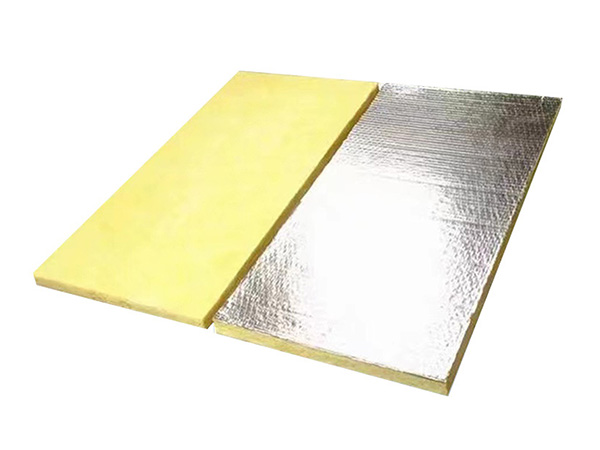
Glass Wool Board
I. Product Overview Glass Wool Board is a crucial form of glass wool products, typically composed of glass wool fibers bonded with a binder. It offers excellent thermal insulation, sound absorption, and fire resistance properties, making it...
I. Product Overview
Glass Wool Board is a crucial form of glass wool products, typically composed of glass wool fibers bonded with a binder. It offers excellent thermal insulation, sound absorption, and fire resistance properties, making it widely used in construction, industry, transportation, and other sectors.
II. Core Features
Thermal Insulation Performance: Glass Wool Board has an extremely low thermal conductivity, effectively preventing heat transfer and serving as an ideal thermal insulation material.
Sound Absorption & Noise Reduction: Its fibrous structure efficiently absorbs sound waves, reducing noise transmission and improving environmental comfort.
Fire Resistance: Classified as a non-combustible material (Grade A), it does not burn at high temperatures, effectively preventing the spread of fire and ensuring safety.
Chemical Stability: Chemically stable, it does not readily react with acids, alkalis, or other chemicals, ensuring long-term reliability.
Hydrophobicity: Certain products exhibit excellent hydrophobicity, effectively preventing liquid water penetration and ensuring insulation performance and durability.
Environmental Friendliness: Free from harmful substances such as formaldehyde, it is safe for humans and the environment, complying with green building standards.
III. Main Application Areas
Construction Industry: Used for external wall insulation, roof insulation, interior partition walls, ceilings, etc., providing efficient thermal insulation and sound absorption solutions.
Industrial Sector: Applied in industrial pipe insulation, equipment insulation, furnace insulation, etc., effectively reducing energy consumption and improving working environments.
Transportation: Utilized in the sound and heat insulation systems of automobiles, ships, and other vehicles to enhance ride comfort.
Air Conditioning Systems: Serves as insulation material for central air conditioning ductwork, improving energy efficiency and reducing cooling loss.
IV. Product Types & Specifications
Based on different application requirements, Glass Wool Board comes in various types, such as:
Standard Glass Wool Board: The basic type, suitable for general insulation scenarios.
Faced Glass Wool Board: Surface is covered with aluminum foil or other facing materials to enhance moisture resistance, heat reflection, and aesthetics.
Air Conditioning Board: Specifically designed for central air conditioning systems, featuring excellent insulation, sound absorption, and fire resistance.
High-Temperature Glass Wool Board: Capable of withstanding higher temperatures, suitable for insulation in high-temperature environments.
It is available in a wide range of specifications. The density of the boards typically ranges from 24 to 96 kg/m³, and dimensions such as thickness, length, and width can be customized according to project requirements.
V. Technical Advantages
Easy Installation: The material is stress-corrosion-free, cuts without breakage during installation, and has low short-term water absorption, ensuring convenient and efficient construction while maintaining material integrity.
Stable Performance: High heat deflection temperature indicates excellent dimensional stability and resistance to shrinkage deformation at high temperatures.
Reliable Quality: Rigorously tested by professional equipment (e.g., thermal conductivity testers, combustion performance analyzers) to ensure all performance indicators meet standards.
In summary, Glass Wool Board has become an indispensable core material in modern building and industrial energy-saving fields due to its outstanding comprehensive performance and wide applicability.