



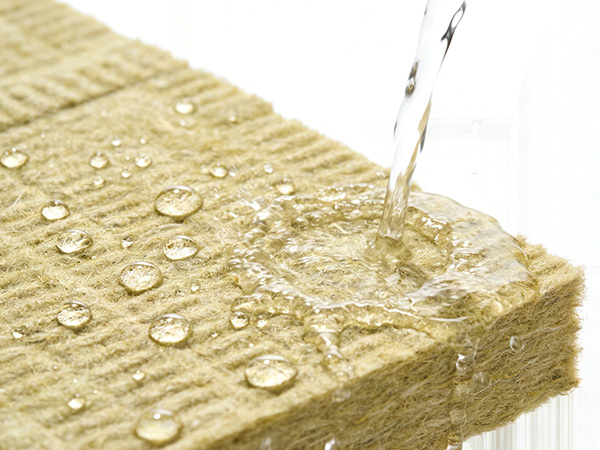
Hydrophobic Rock Wool Board
Hydrophobic Rock Wool Board is a high-performance functional insulation material independently developed and produced by Hebei Huashuo Xingye Thermal Insulation Building Materials Co., Ltd., specially optimized for moisture-proof and water-...
Hydrophobic Rock Wool Board is a high-performance functional insulation material independently developed and produced by Hebei Huashuo Xingye Thermal Insulation Building Materials Co., Ltd., specially optimized for moisture-proof and water-resistant requirements in various insulation application scenarios. Based on the advanced process of high-temperature melting of rock minerals, high-speed centrifugal spinning, curing and precision cutting, the product is added with professional hydrophobic additives in the production process and optimized for fiber structure, which significantly enhances the water repellency while retaining all the excellent properties of traditional rock wool boards such as fire resistance, thermal insulation and sound absorption. With ultra-high hydrophobic rate as the core advantage, it can effectively resist water absorption and moisture erosion in humid environments, and maintain stable performance for a long time. It is an ideal insulation material for building external walls, roofs, basements, industrial pipelines and other scenarios with high moisture-proof requirements, and is widely used in civil construction, industrial insulation and municipal engineering.
Core Product Characteristics
Ultra-High Hydrophobicity & Low Water Absorption
As the core performance of the product, it has a high hydrophobic rate (tested by the standard method of immersing samples in water and measuring weight ratio), and extremely low volume water absorption. The professional hydrophobic additives form a dense water-repellent film on the surface of rock wool fibers, making the board have excellent surface water repellency and internal water resistance. It can effectively prevent the intrusion of liquid water and water vapor in the air, avoid performance degradation caused by water absorption such as reduced thermal insulation and decreased structural strength, and maintain the integrity of the material structure even after long-term contact with humid environments.
Inherent Excellent Fire Resistance
It inherits the inherent non-combustible property of rock wool materials, can withstand high temperatures up to 600℃, and has a high hot load shrinkage temperature. In fire conditions, it will not burn, melt or release toxic smoke and combustible gases, effectively blocking the spread of fire and heat transfer. Its organic content is strictly controlled at an ultra-low level through combustion and chemical analysis, with no combustion-supporting components, fully meeting national and industrial fire safety standards, and realizing the dual effects of water resistance and fire protection in one material.
Stable Thermal Insulation Performance & Energy Saving
It has an extremely low thermal conductivity, with a customizable density range of 80-180kg/m³ and conventional thickness of 30-150mm (special specifications available for customization). The optimized fiber structure and hydrophobic treatment make the thermal insulation performance not affected by moisture and water vapor, and can stably block heat transfer in humid environments such as outdoor, underground and high-humidity workshops. It effectively reduces building energy consumption and industrial equipment heat loss, maintains the stability of indoor and equipment temperature, and achieves excellent and long-lasting energy-saving and emission-reduction effects.
Strong Structural Strength & Durability
The product has strict control over slag ball content (the proportion of particles with diameter >0.25mm) and uniform fiber distribution, with high compressive and tensile strength. The hydrophobic treatment does not damage the fiber structure of the rock wool board, so it can withstand long-term external pressure, wind load, structural vibration and other external forces without deformation, cracking or falling off. It can maintain stable physical and mechanical properties for a long time in cyclic environments of humidity and dryness, and its service life is far longer than ordinary rock wool boards in humid scenarios.
Good Chemical Stability & Environmental Adaptability
It has excellent resistance to acid and alkali corrosion, and will not produce chemical reactions with water, humid air and slight corrosive gases in the environment. It is suitable for various harsh humid environments such as coastal areas with high salt spray, southern rainy areas, building basements, industrial pipeline trenches and underground garages. At the same time, it has good UV resistance and temperature change resistance, and can maintain stable performance when used in outdoor humid environments such as building roofs and external walls, avoiding material aging and performance attenuation caused by moisture and environmental factors.
Multi-Functional Integration & Eco-Friendliness
While having super water resistance, it retains the porous structure of rock wool materials, with excellent sound absorption and noise reduction performance, which can effectively absorb environmental noise and mechanical equipment noise, and optimize the acoustic environment of the application site. It also has appropriate air permeability, which can promote the circulation of air in the building envelope and industrial insulation system, reduce the risk of condensation water formation (without accumulating water inside the material), and protect the building structure and industrial equipment from moisture damage. The product is formaldehyde-free, does not add harmful toxic additives in the production process, and no harmful gases are released during construction and use, complying with green building and environmental protection standards; the production process has low emissions, and waste materials can be recycled, in line with the concept of low-carbon environmental protection.
Main Application Scenarios
Building Exterior Moisture-Proof Insulation
Building external walls: Widely used in the external wall insulation system of residential, commercial and industrial buildings, especially suitable for rainy and humid areas in the south and coastal high-humidity areas, effectively preventing rainwater and water vapor from intruding into the insulation layer.
Roof insulation: Applied to the flat roof, sloped roof and metal roof insulation of various buildings, with high hydrophobicity and low water absorption, it can resist rainwater accumulation and roof seepage, and maintain stable thermal insulation performance for a long time.
Underground engineering: Used for the insulation and moisture-proof of building basements, underground garages and foundation walls, avoiding moisture erosion from the soil and underground water, and protecting the underground structure of the building.
Industrial Humid Environment Insulation
Industrial pipelines: Suitable for the insulation of industrial pipelines in high-humidity workshops, chemical pipeline trenches, sewage treatment plant pipelines and other scenarios, preventing water vapor and condensed water from damaging the insulation layer and ensuring the thermal insulation effect of the pipeline.
Industrial equipment: Applied to the insulation of high-humidity industrial equipment such as water treatment equipment, cooling towers and humidifiers, maintaining stable performance in humid working conditions and extending the service life of equipment insulation layers.
Industrial plant: Used for the wall and roof insulation of high-humidity workshops such as textile mills, paper mills and food processing plants, effectively preventing moisture from entering the plant and ensuring the dryness of the production environment.
Municipal & Special Engineering
Tunnel engineering: Applied to the insulation and moisture-proof of highway and railway tunnels, resisting the high humidity in the tunnel and the erosion of seepage water, and maintaining the thermal insulation and structural stability of the tunnel lining.
Basement ventilation pipelines: Used for the insulation of building basement and underground space ventilation pipelines, preventing condensed water from forming on the surface of the pipeline and causing water seepage and moisture damage.
Coastal engineering: Suitable for the building insulation and industrial insulation projects in coastal areas with high salt spray and high humidity, resisting the erosion of humid salt spray air and ensuring the long-term stability of the insulation system.