



Industrial exhaust systems, kitchen ventilation ducts, and fume extraction networks operate under demanding conditions—elevated temperatures, moisture vapor, grease-laden air, and constant vibration. Effective insulation of these systems is essential for energy efficiency, condensation control, fire safety, and personnel protection. Glass wool insulation for exhaust systems provides a proven, cost-effective solution that meets the thermal and acoustic requirements of exhaust ductwork across multiple applications. This guide examines how glass wool performs in exhaust environments and what specification engineers need to consider.
Why Glass Wool Suits Exhaust Duct Insulation
Exhaust ducts carry heated air, steam, fumes, and combustion byproducts from their source to the building exterior. Glass wool insulation for exhaust systems offers the low thermal conductivity (0.033-0.040 W/mK) needed to maintain exhaust gas temperature, prevent condensation in the ductwork, and protect adjacent building elements from heat damage. The non-combustible mineral fiber core (A1 classification per EN 13501-1) is critical for exhaust systems that may carry combustion products or be exposed to fire conditions.
The fibrous open structure of glass wool also provides acoustic absorption, reducing fan noise and air turbulence noise radiated from exhaust ductwork. This dual thermal-acoustic function is particularly valuable in commercial kitchens, laboratory exhaust systems, and industrial ventilation where both temperature control and noise reduction are required.
Kitchen Exhaust Hood and Duct Insulation
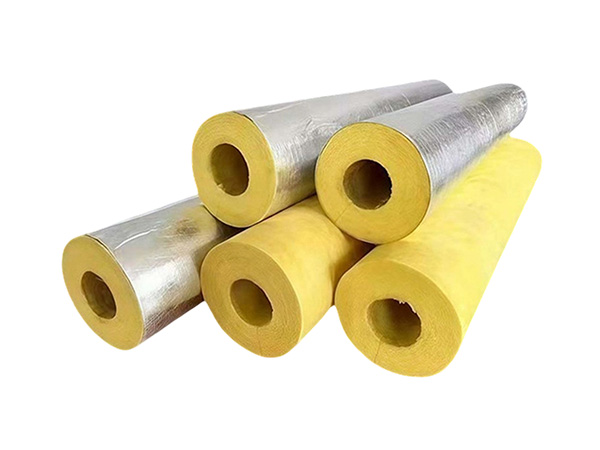
Commercial kitchen exhaust systems handle grease-laden hot air at temperatures of 40-80°C during normal operation, with potential for much higher temperatures during fire events in the cooking area. Glass wool insulation for exhaust systems in kitchen applications is specified at 50-100 mm thickness with aluminum foil facing to provide a cleanable, moisture-resistant surface that prevents grease penetration into the insulation core.
The aluminum foil facing on glass wool duct wrap products serves multiple functions: it provides a vapor retarder that prevents condensation on cold ducts during idle periods, reflects radiant heat back into the exhaust stream, and presents a cleanable surface that meets kitchen hygiene inspection requirements. Kitchen exhaust ducts must also comply with NFPA 96 grease duct fire safety standards—glass wool insulation is the preferred material for maintaining the required fire resistance of kitchen exhaust duct assemblies.
Industrial Process Exhaust Insulation
Industrial exhaust systems from paint booths, drying ovens, welding stations, and chemical fume hoods require insulation to maintain process efficiency, prevent condensation of corrosive vapors inside the ductwork, and protect personnel from hot surfaces. Glass wool insulation for exhaust systems in industrial settings should be specified with the following thickness guidelines:
Low-temperature exhaust (30-80°C): 50 mm thickness with vapor retarder facing
Medium-temperature exhaust (80-150°C): 75 mm thickness with reinforced aluminum facing
High-temperature exhaust (150-230°C): 100 mm thickness, high-density glass wool with stainless steel jacketing
For exhaust systems handling corrosive vapors, verify chemical compatibility of the glass wool product with the specific exhaust constituents. Standard glass wool is resistant to most acids and alkalis found in industrial exhaust, but jacketing materials may require chemical-resistant coatings in aggressive environments.
Steel Structure Workshop Exhaust Systems
Large steel structure workshops and factories typically have extensive roof-mounted exhaust systems serving multiple production zones. Glass wool insulation for exhaust systems in these applications must withstand outdoor exposure, thermal cycling, and wind loads over decades of service. Steel structure dedicated glass wool products with reinforced aluminum foil jacketing and weather-resistant sealants provide the durability required for exposed exhaust ductwork on factory roofs.
The lightweight nature of glass wool—typically 32-48 kg/m³ for exhaust insulation products—minimizes structural loading on roof supports and steel framing. This is a significant advantage for steel structure buildings where every kilogram of added weight on the roof framing translates to increased steel cost. In typical installations, a 50 mm thick glass wool duct wrap system adds less than 2 kg per square meter of duct surface—substantially lighter than equivalent calcium silicate or rock wool systems.
Fire Safety and Compliance
Fire safety is a primary concern for exhaust systems because they can transport flames and hot gases from one building zone to another. Glass wool insulation for exhaust systems provides non-combustible fire protection that does not contribute to flame spread or smoke development. The A1 non-combustible classification applies to the glass wool core; verify that the complete insulated duct assembly—including facings, adhesives, and sealants—complies with the applicable fire safety standard for the specific building occupancy type.
For exhaust ducts penetrating fire-rated walls and floors, glass wool board or wrap insulation forms part of the fire-rated penetration seal system. Specify tested and certified penetration seal assemblies incorporating glass wool insulation to maintain the building's fire compartmentation integrity.
Installation Best Practices for Exhaust Ducts
Correct installation is critical for exhaust system insulation performance. Glass wool duct wrap should be installed with all joints staggered and compressed 5-10% to prevent gaps from developing during thermal cycling. Aluminum foil tape with pressure-sensitive adhesive seals longitudinal and circumferential joints, providing vapor retarder continuity essential for preventing condensation.
For rectangular exhaust ducts, secure the glass wool insulation with mechanical fasteners (weld pins or self-adhesive pins) at maximum 300 mm centers on all sides. For circular ducts, overlap wraps by 50 mm at joints and secure with stainless steel bands at 200 mm spacing. All penetrations—hangers, supports, access doors—must be individually insulated and sealed to maintain thermal and vapor barrier continuity.
FAQ
Q1: What thickness of glass wool is needed for exhaust duct insulation?
A: For most exhaust systems operating at 40-80°C, 50 mm of glass wool insulation for exhaust systems provides adequate thermal resistance and condensation control. Higher-temperature or longer-duct runs require 75-100 mm thickness. Verify against project-specific thermal calculations.
Q2: Can glass wool be used on outdoor exhaust ducts?
A: Yes. Specify glass wool with weather-resistant aluminum or stainless steel jacketing and UV-stable sealants for outdoor exhaust duct applications. Verify that the complete jacketing system is rated for the expected outdoor exposure conditions.
Q3: Is glass wool insulation suitable for kitchen exhaust grease ducts?
A: Yes, with proper specifications. Glass wool with impermeable aluminum foil facing prevents grease penetration and provides a cleanable surface. The insulation system must also comply with NFPA 96 requirements for kitchen exhaust duct fire safety.
Q4: How does glass wool compare to rock wool for exhaust insulation?
A: Glass wool provides equivalent thermal performance to rock wool at lower density and lower cost for exhaust applications below 230°C. Rock wool is preferred for exhaust systems exceeding 230°C continuous service temperature.
Q5: Does glass wool insulation help reduce exhaust fan noise?
A: Yes. Glass wool insulation for exhaust systems provides significant acoustic absorption, reducing fan noise and air turbulence noise radiated from ductwork by 8-15 dB(A) depending on thickness and density.
Conclusion
Exhaust systems in commercial kitchens, industrial facilities, and steel structure workshops all benefit from the thermal efficiency, fire safety, and acoustic performance of glass wool insulation for exhaust systems. Correct specification—matching product density, facing type, and thickness to the specific exhaust temperature, moisture exposure, and fire safety requirements—ensures reliable long-term performance. For steel structure factory exhaust systems, the lightweight nature of glass wool provides significant structural cost advantages while delivering the thermal and fire protection performance that exhaust applications demand.
References
1. EN 14303:2009+A1:2013, "Thermal Insulating Products for Building Equipment and Industrial Installations — Factory Made Mineral Wool (MW) Products — Specification," European Committee for Standardization, Brussels, 2013.
2. NFPA 96, "Standard for Ventilation Control and Fire Protection of Commercial Cooking Operations," National Fire Protection Association, Quincy, MA, 2021.
3. ASHRAE Handbook — HVAC Systems and Equipment, Chapter 16: Duct Construction, American Society of Heating, Refrigerating and Air-Conditioning Engineers, Atlanta, GA, 2020.
4. ASTM C553-13, "Standard Specification for Mineral Fiber Blanket Thermal Insulation for Commercial and Industrial Applications," ASTM International, West Conshohocken, PA, 2013.
5. ISO 23993:2008, "Thermal Insulation Products for Building Equipment and Industrial Installations — Determination of Design Heat Transfer Coefficients," International Organization for Standardization, Geneva, 2008.