



For metal building owners, the summer cooling bill is often a shock—how can a building with a relatively small volume of air space consume so much energy to maintain a comfortable interior temperature? The answer lies in the physics of heat transfer through metal roof panels. A steel roof exposed to summer sun accumulates and transmits heat at a rate that no air conditioning system can fully compensate for without thermal insulation as its first line of defense. Understanding how roof thermal insulation works to reduce heat gain is essential for building owners and project specifiers making informed decisions about cooling strategies for industrial and commercial facilities.
Understanding the Three Mechanisms of Heat Transfer Through Roofs
Heat enters a metal building through three simultaneous mechanisms: conduction through the roof metal, radiation from the hot roof surface to the building interior, and convection from the moving air layer at the roof surface. Of these three, radiation is by far the most significant for metal roofs exposed to direct sunlight. A metal roof surface at 70°C radiates thermal energy downward at a rate that corresponds to a significant heat flux—far greater than the conductive heat flow through the same roof panel.
Without roof thermal insulation, each of these three heat transfer mechanisms operates without resistance, delivering heat into the building interior at the maximum rate permitted by the laws of physics. The air conditioning system then must remove this heat continuously to maintain the target interior temperature—consuming energy at high rates and incurring significant operating cost.
How Glass Wool Blanket Blocks Conductive Heat Transfer
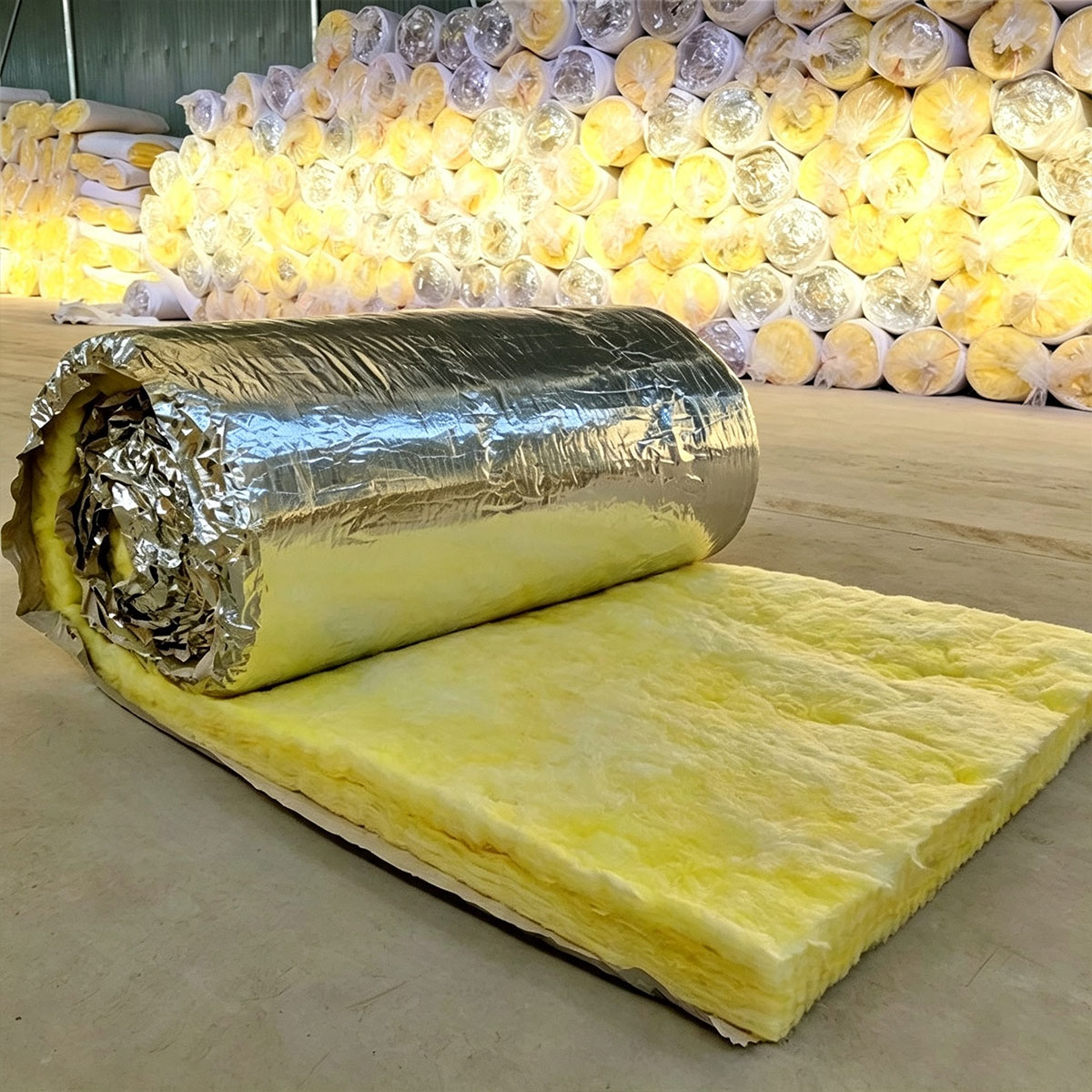
The fibrous structure of glass wool provides exceptional resistance to conductive heat flow. Air trapped between the fine glass fibers is effectively immobilized, and the thermal conductivity of stationary air is very low (approximately 0.025 W/mK). Quality glass wool products achieve thermal conductivity values of 0.033-0.040 W/mK—meaning a 100 mm layer reduces conductive heat transfer through the roof by approximately 85% compared to an uninsulated metal roof.
This reduction in conductive heat flow is the primary thermal benefit of roof thermal insulation in temperate and cold climates where the temperature difference between interior and exterior drives significant heat loss in winter alongside heat gain in summer. In hot climates, the conductive benefit of glass wool remains significant but is complemented by the radiant barrier effect of foil-facing, which addresses the dominant heat gain mechanism in high-solar-exposure conditions.
The Radiant Barrier Effect: Why Foil-Facing Dramatically Reduces Heat Gain
For metal roofs in warm and hot climates, the most impactful feature of roof thermal insulation is the radiant barrier effect of aluminum foil facing. The aluminum foil surface has an emissivity of approximately 0.03-0.05, meaning it emits only 3-5% of the thermal radiation that a perfect black surface would emit at the same temperature. This means the foil reflects approximately 95-90% of incident radiant heat back toward the roof surface, preventing it from entering the building interior.
Our manufacturing facility produces roof thermal insulation products with factory-applied aluminum foil facing, where the foil is bonded to the glass wool surface under controlled conditions to ensure consistent reflectivity and adhesion across the full product width. This radiant barrier effect alone can reduce the cooling load in a metal building by 20-35% during peak summer conditions—delivering significant energy savings that directly offset the cost of the insulation investment.
Combined Performance: The Glass Wool Blanket System
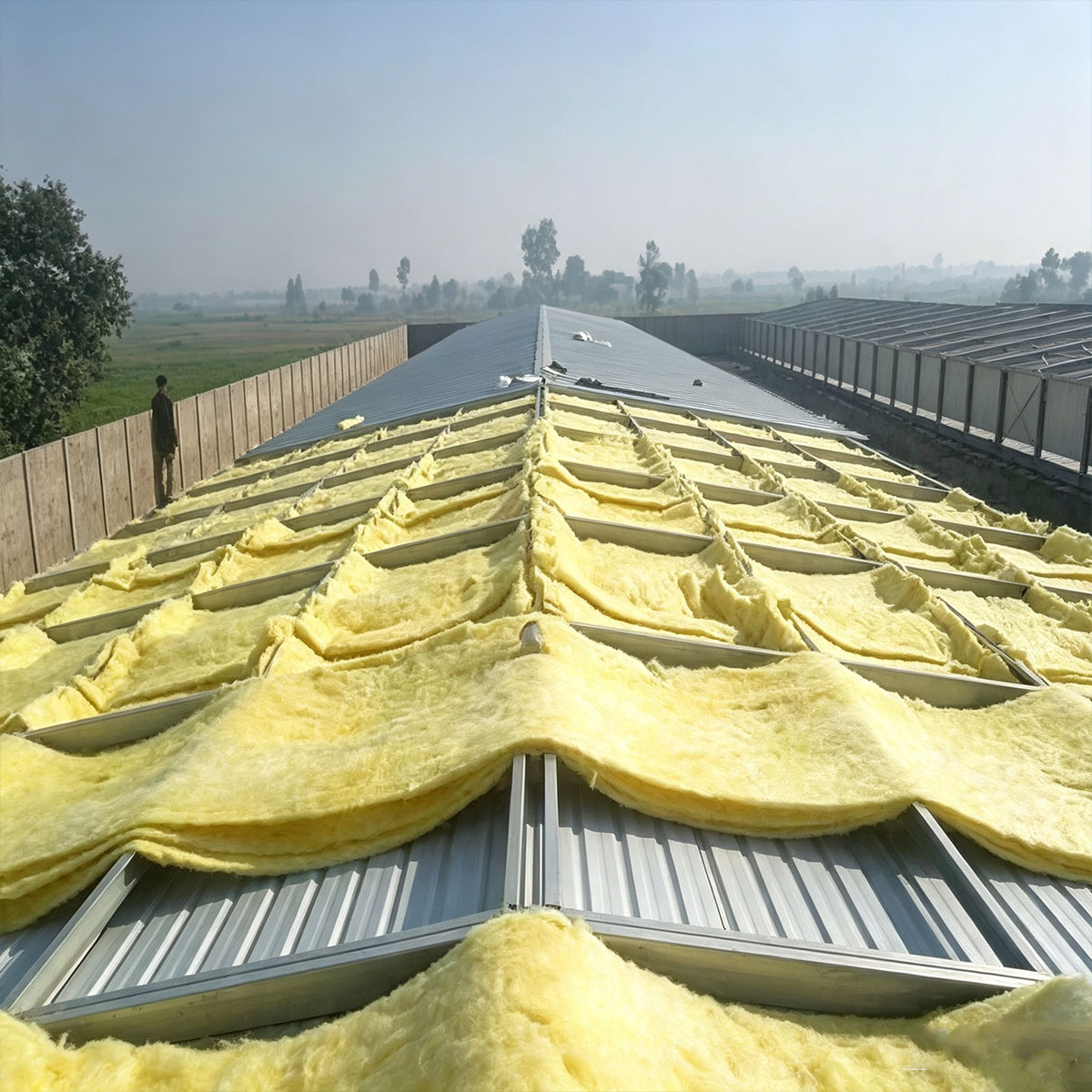
The combined effect of conductive resistance from the glass wool core and radiant reflection from the foil facing makes the roof thermal insulation blanket the most effective available solution for reducing heat gain in metal buildings. The glass wool core slows conductive heat transfer, while the foil facing reflects radiant heat back toward its source. For a metal roof in a hot climate, this dual-mechanism system can reduce total heat gain through the roof by 50-70% compared to an uninsulated roof.
These reductions translate directly to measurable cooling energy savings. For a 2000 m² metal factory roof, the cooling energy savings from adding quality roof thermal insulation can amount to several thousand dollars per year—savings that continue for the 25-50 year service life of the insulation. Our manufacturer team provides cooling load reduction estimates and energy savings projections for every project specification, enabling building owners to quantify the financial return on the insulation investment before committing to a purchase.
Condensation Control: An Often Overlooked Benefit of Roof Thermal Insulation
While roof thermal insulation is specified primarily for its heat gain reduction benefits, the condensation control function of foil-faced glass wool products deserves equal attention. During cooler months or in humid conditions, the underside of an uninsulated metal roof surface can reach temperatures below the interior dew point, causing water to condense on the metal and drip into the building interior.
By maintaining the roof panel temperature above the dew point through thermal resistance, the roof thermal insulation system prevents this condensation from forming. The foil facing adds a continuous vapor retarder layer that blocks moisture migration from the building interior, providing double protection against condensation in all conditions. This condensation prevention protects equipment, inventory, and interior finishes while also extending the service life of the roof structure itself.
Choosing the Right Roof Thermal Insulation Specification
Selecting the correct roof thermal insulation specification depends on the building's geographic location, climate zone, operating conditions, and cooling load profile. For most metal building applications in hot climates, foil-faced glass wool blanket at 100-150 mm thickness provides the optimal combination of conductive resistance and radiant reflection. For buildings in temperate climates with significant heating demands alongside cooling needs, the same specification delivers year-round thermal performance.
Our supplier team works with project specifiers to determine the optimal thickness and facing specification based on the building's specific thermal profile. We supply roof thermal insulation products to factory, warehouse, and commercial building projects throughout the region, with production capacity to meet both standard and custom specifications. Our technical documentation—including U-value calculations, condensation risk assessments, and energy savings projections—is available to support specification decisions and compliance submissions.
FAQ
Q1: How much heat gain does roof thermal insulation actually reduce?
A: Quality foil-faced roof thermal insulation reduces total heat gain through metal roofs by 50-70% compared to uninsulated equivalents, combining conductive resistance from glass wool with radiant reflection from the aluminum foil facing.
Q2: Why does foil-facing on roof thermal insulation reduce heat gain so effectively?
A: Aluminum foil has an emissivity of 0.03-0.05, meaning it reflects 95-90% of incident radiant heat back toward the roof surface rather than allowing it to radiate into the building interior.
Q3: Does roof thermal insulation help in winter as well as summer?
A: Yes. In winter, the glass wool core reduces heat loss from the building interior through the roof, lowering heating energy consumption. The same roof thermal insulation specification delivers benefits in both seasons.
Q4: What thickness of roof thermal insulation is recommended for metal buildings in hot climates?
A: For hot climate metal buildings, 100-150 mm of foil-faced glass wool blanket provides the best balance of conductive resistance and radiant reflection to minimize heat gain while remaining cost-effective.
Q5: Can the manufacturer provide energy savings projections for my specific project?
A: Yes. Our technical team prepares cooling load reduction estimates and energy savings projections based on the building's specific location, roof area, climate zone, and operating conditions for every project enquiry.
Conclusion
Heat gain through metal roofs is the dominant source of cooling load in industrial and commercial buildings—and it is entirely manageable with the right roof thermal insulation strategy. The combination of conductive resistance from glass wool and radiant reflection from foil-facing delivers the most effective heat gain reduction available in a single product, translating to measurable cooling energy savings that compound year after year. Working with an experienced insulation manufacturer ensures the specification is optimized for the building's specific thermal profile, the product quality is consistent, and the supply is reliable enough to support the construction schedule.
References
1. ISO 6946:2017, "Building Components and Building Elements — Thermal Resistance and Thermal Transmittance — Calculation Methods," International Organization for Standardization, Geneva, 2017.
2. EN 13162:2012+A1:2015, "Thermal Insulation Products for Buildings — Factory Made Glass Wool (GW) Products — Specification," European Committee for Standardization, Brussels, 2015.
3. ASHRAE Handbook — Fundamentals, Chapter 26: Insulation for Mechanical Systems, American Society of Heating, Refrigerating and Air-Conditioning Engineers, Atlanta, GA, 2021.
4. CIBSE Guide F: Energy Efficiency in Buildings, Chartered Institution of Building Services Engineers, London, 2019.
5. Jelle, B.P. (2011). "Traditional, state-of-the-art and future thermal building insulation materials." Energy and Buildings, 43(10), 2547-2564.