



Basalt rock wool is manufactured from natural basalt rock—a volcanic igneous rock with exceptional mineral purity—melted at temperatures exceeding 1400°C and spun into fine fibers. The resulting basalt rock wool board products offer superior performance characteristics compared to conventional slag-based mineral wool products, making them increasingly preferred for demanding industrial insulation applications. This article examines the specific basalt rock wool board advantages that make it the material of choice for high-temperature, high-load, and fire-critical industrial insulation projects.
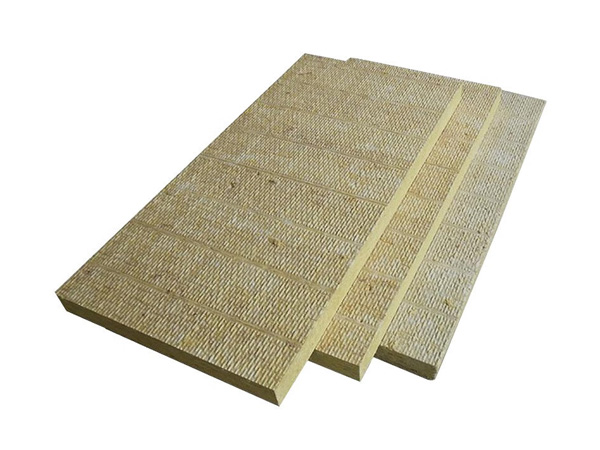
Higher Temperature Resistance
The most significant basalt rock wool board advantage is its substantially higher maximum service temperature compared to glass wool. Basalt rock wool maintains structural integrity and thermal performance at continuous service temperatures up to 750°C—approximately three times higher than standard glass wool—and can withstand short-term peak temperatures reaching 1000°C without fiber degradation or melting.
This temperature capability enables basalt rock wool board specification for power plant boiler insulation, petrochemical process piping, industrial furnace and kiln external insulation, exhaust gas ductwork, and steel manufacturing process insulation. At elevated temperatures, basalt rock wool does not experience the binder burnout, fiber shrinkage, or thermal conductivity increase that limits glass wool performance.
Superior Mechanical and Compressive Strength
Basalt rock wool board demonstrates significantly higher compressive strength and dimensional stability compared to glass wool products at equivalent density. At 100 kg/m³ density, quality basalt rock wool board achieves compressive resistance exceeding 60 kPa at 10% deflection—approximately 50% higher than equivalent glass wool products.
This mechanical advantage enables basalt rock wool board applications in load-bearing floor insulation under concrete slabs, roof insulation under ballasted membrane systems, storage tank and vessel insulation, and insulation under pipe shoes on high-temperature process piping. The superior fiber-to-fiber bonding also provides better resistance to vibration-induced settling and thermal cycling-induced compression.
Non-Combustible Fire Performance
Basalt rock wool is classified as non-combustible (A1) under EN 13501-1 and achieves zero flame spread and smoke development under ASTM E84 testing. However, basalt rock wool maintains its structural integrity and fire barrier function at temperatures significantly higher than glass wool before softening—approximately 1100°C versus 600°C for glass wool. In fire scenarios, this thermal margin provides additional safety time before insulation failure occurs. Basalt rock wool does not produce flaming droplets or continuous smoke plumes when exposed to fire, eliminating secondary ignition hazards.
Chemical and Environmental Stability
The basalt mineral composition provides basalt rock wool board with superior chemical stability compared to glass wool. Basalt rock wool is resistant to attack by alkalis, acids, and organic solvents present in industrial process environments, making it suitable for insulation applications in chemical processing, oil and gas, and wastewater treatment facilities. The material's resistance to moisture penetration and biological growth extends its service life in humid and outdoor environments.
Sound Absorption Performance
Basalt rock wool board provides excellent acoustic absorption across broad frequency ranges, with Noise Reduction Coefficient (NRC) values of 0.85-1.10 depending on thickness and density. Industrial applications include compressor and turbine enclosures for noise control, industrial fan and pump room acoustic treatment, and steel structure noise barrier panels.
Sustainability and Service Life
Basalt rock wool has an expected service life exceeding 50 years in building applications. Manufacturing processes require less binder than glass wool products—typically less than 2% binder content versus 3-5% for glass wool—reducing organic content and potential VOC emissions.
Conclusion
The basalt rock wool board advantages—higher temperature resistance, superior compressive strength, enhanced fire safety, chemical stability, and proven durability—make it the preferred insulation material for demanding industrial applications where glass wool products would underperform or fail. Specification engineers should consider basalt rock wool board as the default choice for process insulation, high-temperature applications, load-bearing constructions, and fire-critical systems.
References
1. EN 13162:2012+A1:2015, "Thermal Insulation Products for Buildings — Factory Made Mineral Wool Products — Specification," European Committee for Standardization, Brussels, 2015.
2. ASTM C612-14, "Standard Specification for Mineral Fiber Block and Board Thermal Insulation," ASTM International, West Conshohocken, PA, 2014.
3. Yajun, L. and Jinzhong, W. (2019). "Thermal and mechanical properties of basalt mineral wool insulation boards." Construction and Building Materials, 215, 181-189.
4. ISO 21820:2019, "Thermal Insulation — Determination of Short-Term Compression Behavior of Mineral Wool Products," International Organization for Standardization, Geneva, 2019.
5. EURIMA, "Environmental Product Declaration: Rock Wool Thermal Insulation," Brussels, 2022.