



Composite rock wool board products represent the latest advancement in mineral wool insulation technology, combining multiple material layers within a single board to optimize performance across competing requirements. By integrating different fiber orientations, density zones, and facing materials into one coherent product, composite rock wool board solutions address application challenges that single-material boards cannot resolve efficiently.
Dual-Density and Triple-Density Board Architecture
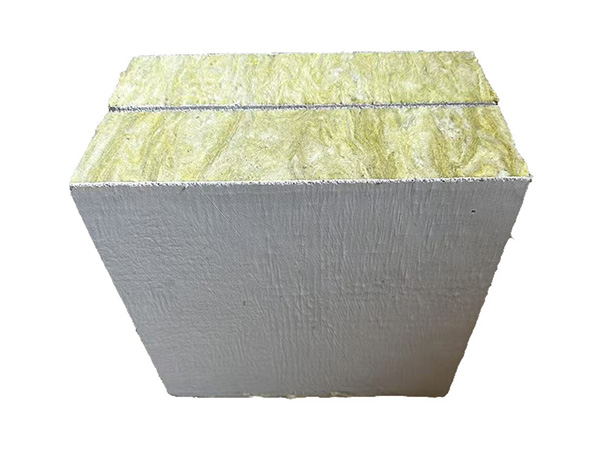
The most common composite rock wool board configuration is the dual-density design, where a high-density outer skin is factory-bonded to a lower-density core. The outer skin provides mechanical protection, enhanced compressive resistance, and improved handling characteristics, while the lower-density core delivers optimal thermal resistance at lower material cost per unit volume.
This architectural approach exploits the fundamental principle that insulation performance is primarily determined by the trapped air content of the fibrous matrix rather than fiber density alone. Triple-density boards extend this concept further by incorporating a very low-density central layer between two high-density skins, achieving thermal performance close to theoretical optimum while maintaining practical mechanical properties.
Aluminum-Faced Composite Boards
Factory-applied aluminum facing on composite rock wool board products transforms the insulation into a complete system component with integrated vapor retarder, surface protection, and weather barrier function. Available configurations include standard reinforced foil, perforated aluminum for vapor diffusion applications, stucco-embossed aluminum for enhanced durability, and white painted aluminum for aesthetic installations.
The aluminum facing eliminates the need for separate vapor retarder installation, reducing installation labor and ensuring continuous vapor barrier integrity. When combined with sealants at joints and penetrations, aluminum-faced composite rock wool board systems achieve water vapor transmission rates below 0.02 g/m²/day—effectively impermeable to moisture vapor.
Thermally Enhanced Composite Boards
Some composite rock wool board products incorporate thin reflective layers or vacuum-insulated panels as integral layers within the board structure, achieving thermal conductivity values of 0.020-0.030 W/mK—significantly lower than standard rock wool—while maintaining non-combustibility, acoustic absorption, and mechanical robustness. These products are specified where space constraints limit insulation thickness but thermal performance requirements cannot be reduced.
Thermal Bridge Mitigation with Composite Boards
Composite rock wool board products with integrated thermal break layers address thermal bridging at structural junctions where high-conductivity materials penetrate the insulation layer. By incorporating a low-conductivity polymer or mineral wool thermal break zone within the board, thermal bridging can be reduced by 60-80% compared to equivalent single-material boards. Continuity of insulation at structural junctions is one of the most challenging aspects of building envelope design—gaps or compression at balcony connections, parapet terminations, and window frame perimeters can account for 15-25% of total envelope heat loss.
Performance Characteristics and Testing
Composite rock wool board products undergo comprehensive performance testing covering thermal conductivity (EN 12667 or ASTM C518), compressive strength (EN 826), tensile strength perpendicular to faces (EN 1607), dimensional stability (EN 1604), and fire classification (EN 13501-1). Declared thermal conductivity values at 10°C mean temperature typically range from 0.033 to 0.038 W/mK.
Installation Advantages
The factory-integrated construction of composite rock wool board eliminates several field installation variables. Because vapor retarder, surface protection, and thermal break functions are built into the product at the factory, field installation requires only correct joint alignment, adequate fixing, and proper sealing. The high-density skin also improves handling characteristics, reducing damage during transport and installation.
Conclusion
Composite rock wool board products deliver optimized performance by integrating multiple material functions into engineered, factory-controlled constructions. Specification engineers should consider composite rock wool board products where project requirements demand superior mechanical performance, integrated vapor management, thermal bridge mitigation, or space-constrained thermal performance.
References
1. EN 13162:2012+A1:2015, "Thermal Insulation Products for Buildings — Factory Made Mineral Wool Products — Specification," European Committee for Standardization, Brussels, 2015.
2. EN 826:2013, "Thermal Insulating Products for Building Applications — Determination of Compression Behaviour," European Committee for Standardization, Brussels, 2013.
3. Schöck, H. and Kuster, J. (2020). "Thermal bridge mitigation using composite mineral wool boards at structural junctions." Journal of Building Physics, 44(2), 167-184.
4. ISO 6946:2017, "Building Components and Building Elements — Thermal Resistance and Thermal Transmittance — Calculation Methods," International Organization for Standardization, Geneva, 2017.
5. ASTM C518-21, "Standard Test Method for Steady-State Thermal Transmission Properties by Means of the Heat Flow Meter Apparatus," ASTM International, West Conshohocken, PA, 2021.