



The shift toward formaldehyde-free glass wool represents one of the most significant product development advances in the insulation industry over the past decade. Driven by growing awareness of indoor air quality impacts and increasingly stringent VOC emission regulations, formaldehyde-free formulations now deliver equivalent—and in some cases superior—thermal and acoustic performance compared to traditional bindered products. This article explains the technology behind formaldehyde-free glass wool, its performance characteristics, regulatory context, and procurement considerations for commercial and industrial insulation projects.
The Formaldehyde Problem in Traditional Glass Wool
Traditional glass wool insulation uses phenol-formaldehyde (PF) resin as a binder to bind glass fibers together and maintain the fibrous mat structure during handling, installation, and service. While formaldehyde-based binders provide excellent fire performance, mechanical strength, and cost efficiency during manufacturing, they present two distinct concerns during the product lifecycle.
First, residual free formaldehyde in the binder can continue to off-gas throughout the product's service life, contributing to indoor air contamination. Although measured emission levels from installed traditional glass wool are typically well below regulatory thresholds, health-conscious building owners, green building certification programs, and occupants sensitive to chemical exposures have driven demand for alternatives.
Second, formaldehyde is classified as a known human carcinogen by the International Agency for Research on Cancer (IARC) and is regulated under REACH in Europe, CARB Phase II in California, and equivalent standards in multiple other jurisdictions. Compliance with these regulations has incentivized manufacturers to develop binder systems that eliminate formaldehyde from the formulation entirely.
Formaldehyde-Free Binder Technology
Modern formaldehyde-free glass wool employs acrylic-based or bio-based binder systems that eliminate formaldehyde from the formulation. Acrylic binders—derived from acrylic acid polymers—provide fiber binding through a cross-linking curing process that occurs during manufacturing at temperatures similar to traditional PF binder cure profiles.
Bio-based alternatives use renewable raw materials such as sugars, starches, or plant-derived proteins combined with cross-linking agents that achieve equivalent mechanical properties without petroleum-derived formaldehyde precursors. Both approaches produce insulation with identical fiber diameter distributions, density profiles, and overall product geometry to traditional products, enabling direct substitution in most applications.
Key performance attributes of formaldehyde-free glass wool products include:
Thermal conductivity matching traditional products: 0.032-0.040 W/mK depending on density
Service temperature range of -50°C to +230°C for standard acrylic-bound products
Non-combustible fiber core with fire classification A1 (EN 13501-1)
VOC emissions below detection limits for formaldehyde and total volatile organic compounds
Equivalent fiber diameter range of 3-8 microns for consistent thermal and acoustic performance
Thermal Insulation Performance
Thermal conductivity is determined primarily by fiber diameter distribution and product density—not by binder chemistry. Formaldehyde-free glass wool achieves identical thermal conductivity values to traditional products because the binder occupies less than 5% of product volume and has negligible impact on the fiber-air composite that governs heat transfer.
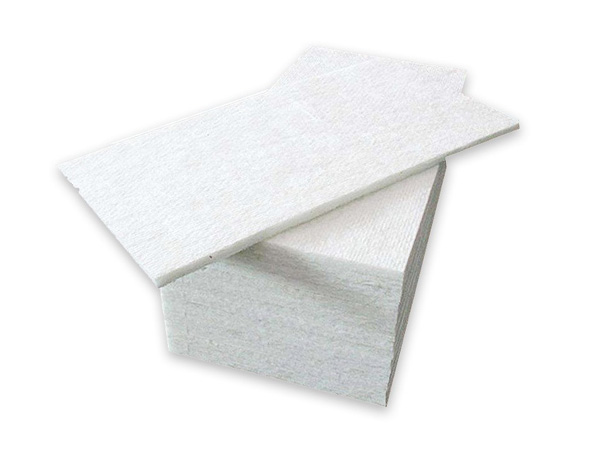
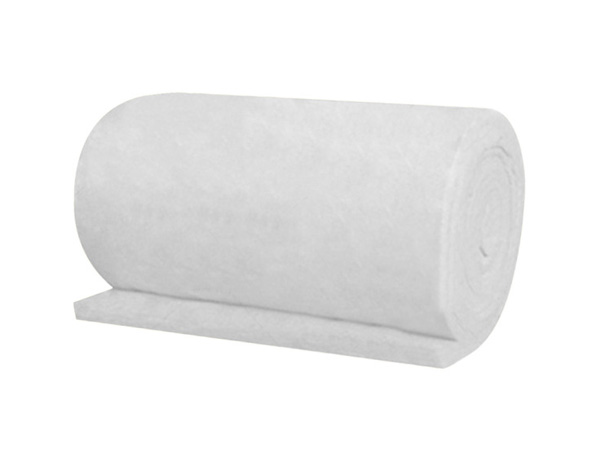
For standard building applications, formaldehyde-free glass wool rolls and batts provide thermal conductivity of 0.032-0.044 W/mK at densities of 12-75 kg/m³, identical to the performance range of traditional equivalents. Board products at 80-150 kg/m³ achieve thermal conductivity of 0.033-0.036 W/mK regardless of binder chemistry.
The air gap resistance of formaldehyde-free products is maintained because the binder formulation preserves the resilient, spring-like fiber structure that prevents compaction and maintains consistent loft thickness throughout the product's service life. Compression testing per EN 1604 confirms formaldehyde-free products recover to within 90% of original thickness after packaging, shipping, and installation compression.
Indoor Air Quality and Health Benefits
The primary driver for specifying formaldehyde-free glass wool is indoor air quality improvement. Formaldehyde emission testing per CDHS/EHLB/R-174 (the ASTM D5116 chamber test method) shows formaldehyde-free products emit formaldehyde at levels below 0.01 mg/m²h—below standard analytical detection limits and orders of magnitude below the 0.10 mg/m²h threshold specified in LEED v4.1 for Low-Emitting Materials.
For building certifications including LEED, BREEAM, WELL Building Standard, and Green Star, formaldehyde-free insulation products contribute directly to credit compliance for Indoor Environmental Quality, Materials and Resources, and Health and Wellness categories. Projects targeting LEED v4.1 must document VOC emissions for all interior finish products; using formaldehyde-free insulation eliminates one variable from the compliance documentation burden.
Occupants in buildings insulated with formaldehyde-free products report fewer complaints related to eye irritation, respiratory sensitivity, and perceived "chemical smell" that is sometimes associated with newly installed traditional insulation. These benefits are particularly valued in healthcare facilities, educational buildings, childcare centers, and residential construction.
Specification Considerations for Commercial Projects
When specifying formaldehyde-free glass wool for commercial projects, several technical and procurement considerations apply. First, verify that the nominated product carries third-party certification for formaldehyde-free status—not just manufacturer self-declaration. EC, CE, and UL Environment certifications provide independent verification of formaldehyde content and emission testing results.
Second, confirm compatibility with adjacent materials and system requirements. While formaldehyde-free products are chemically inert once cured and cooled, the acrylic binder may have different interaction characteristics with vapor barriers, sealants, and facing materials. Consult the manufacturer for approved accessory and system compatibility guidance.
Third, account for any specification revision required in project documentation. Update insulation schedules, specification sections, and drawing notes to reference "formaldehyde-free" or "FF" variants explicitly, ensuring the correct product reaches the jobsite. Failure to update specifications creates risk that traditional products will be supplied inadvertently.
Cost Comparison and Market Availability
Formaldehyde-free glass wool products typically carry a 5-15% cost premium over traditional equivalents due to higher raw material costs for acrylic and bio-based binders. However, the total installed cost differential is often smaller because specification requirements, certification compliance, and reduced post-installation air quality management offset material cost differences.
Major manufacturers including Knauf Insulation, Saint-Gobain Isover, and Johns Manville now offer formaldehyde-free product ranges across their standard glass wool portfolios, ensuring broad availability for commercial specification. Lead times are generally equivalent to traditional products, with no significant supply chain premium for formaldehyde-free variants.
Conclusion
Formaldehyde-free glass wool has matured from a niche specialty product to a mainstream specification option across all building types. Technical performance matching traditional products, proven indoor air quality benefits, and increasingly mandatory regulatory requirements make formaldehyde-free insulation a default choice for projects targeting contemporary sustainability standards. Procurement teams and specification engineers should treat formaldehyde-free glass wool as the standard product line unless specific project requirements mandate otherwise.
References
1. ISO 16000-9:2006, "Indoor Air — Part 9: Determination of the Emission of Volatile Organic Compounds from Building Products and Furnishings — Emission Test Chamber Method," International Organization for Standardization, Geneva, 2006.
2. CARB (California Air Resources Board), "Compressed and Processed Wood Products," Title 17, California Code of Regulations, Section 93120 et seq., 2009.
3. Uhlar, S. and Heiler, C. (2020). "Formaldehyde-free mineral wool insulation: manufacturing processes and product performance." Applied Sciences, 10(18), 6451.
4. LEED v4.1 Building Design and Construction Reference Guide, U.S. Green Building Council, Washington, DC, 2023.
5. ISO 10456:2007, "Building Materials and Products — Hygrothermal Properties — Tabulated Design Values and Procedures for Determining Declared and Design Thermal Values," International Organization for Standardization, Geneva, 2007.