



Selecting the correct density specification is one of the most impactful decisions in glass wool insulation procurement. Density directly determines thermal resistance, acoustic absorption, compressive strength, and cost—not to mention installation handling characteristics. This article explains how glass wool density works, how it affects insulation performance across different metrics, and how to match density specifications to application requirements for optimal value.
What Is Glass Wool Density?
Glass wool density is expressed as mass per unit volume, typically kilograms per cubic meter (kg/m³). This measurement represents the amount of glass fiber contained within a given volume of insulation, which in turn determines the proportion of fiber versus trapped air in the material structure. Since both fiber and air contribute to thermal and acoustic performance, density becomes the primary engineering variable for tuning insulation behavior.
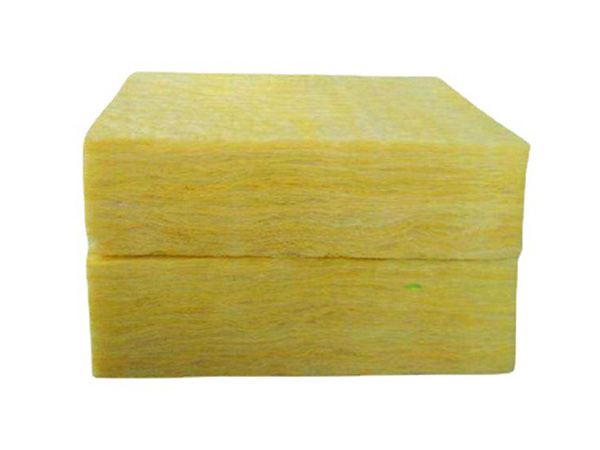
Standard glass wool products span a wide density range from approximately 10 kg/m³ for lightweight flexible rolls used in cavity wall construction, to 150 kg/m³ for rigid high-density boards designed for load-bearing applications. Understanding where a specific product falls within this range—and what that means for performance—is essential for correct specification.
Thermal Conductivity and Density Relationship
The relationship between density and thermal performance follows a characteristic curve. At very low densities, limited fiber content allows excessive air movement within the material, reducing thermal resistance. As density increases, the fibrous matrix becomes more effective at trapping still air and suppressing convective heat transfer, improving thermal resistance up to an optimum density point.
For most glass wool products, the thermal conductivity minimum occurs in the density range of 40-80 kg/m³. Below this range, thermal resistance decreases as density drops. Above this range, further density increases yield diminishing thermal returns—the additional fiber provides marginally better conduction resistance but displaces the high-resistance trapped air that actually drives insulation performance.
At 10°C mean temperature, representative thermal conductivity values across the density spectrum are: 0.050 W/mK at 12 kg/m³; 0.038 W/mK at 40 kg/m³; 0.035 W/mK at 65 kg/m³; and 0.042 W/mK at 120 kg/m³. These values illustrate the characteristic U-shaped performance curve and explain why very low-density products require greater thickness to achieve equivalent thermal resistance.
Acoustic Absorption and Density
Density influences acoustic absorption through two mechanisms: fiber mass and air flow resistance. Higher-density glass wool provides greater mass that resists sound wave penetration, while the interconnected fiber structure creates air flow resistance that dissipates acoustic energy as heat.
Low-density glass wool (10-30 kg/m³) performs well for absorption of mid-frequency speech sounds but is less effective against low-frequency noise from mechanical equipment and traffic. High-density boards (80-150 kg/m³) extend absorption performance into lower frequency ranges, making them preferred for machine room enclosures, plant rooms, and industrial HVAC applications where low-frequency noise control is critical.
Noise Reduction Coefficient (NRC) values increase proportionally with density for glass wool products: 50 mm thickness at 24 kg/m³ yields NRC of approximately 0.70; at 48 kg/m³, the same thickness achieves NRC of 0.90; at 96 kg/m³, NRC approaches 1.05. These differences directly impact whether a single insulation layer can meet acoustic design targets or whether supplementary acoustic treatment is required.
Compressive Strength and Load-Bearing Capacity
Compressive strength—the resistance to deformation under applied load—increases linearly with density in glass wool insulation. This characteristic determines whether a product can support foot traffic, equipment loads, or cladding systems without excessive compression that would reduce effective insulation thickness.
For floor insulation under concrete screeds or floor finishes, specify minimum 120 kg/m³ density glass wool boards to resist construction traffic loads during and after installation. For roof insulation supporting ballasted membrane systems, 100-150 kg/m³ density provides the necessary compressive resistance to prevent membrane puncture and insulation crushing.
Compression set testing per ASTM C165 confirms that quality glass wool products recover to within 90-90% of original thickness after 10% compressive deflection when load is removed. However, sustained loads at deflections exceeding 20% may cause permanent thickness reduction, compromising thermal performance over the service life.
Moisture Resistance and Density
Moisture absorption in glass wool follows an inverse relationship with density: higher-density products resist moisture penetration more effectively because the denser fiber matrix presents smaller void spaces for water ingress. This characteristic is particularly relevant for insulation in humid environments or applications where occasional water exposure is possible.
Standard glass wool products absorb 2-5% by weight under partial immersion conditions (EN 1609 test). High-density boards (>80 kg/m³) typically exhibit lower water absorption than low-density products due to reduced void volume. For consistently wet environments, specify water-repellent treated glass wool with factory-applied vapor barriers and appropriate jacketing systems.
Application-Specific Density Selection Guide
Cavity wall insulation: 20-40 kg/m³ flexible batts provide optimal thermal performance for standard cavity widths and are sufficiently flexible to accommodate construction tolerances and irregularities.
Loft and roof insulation: 10-25 kg/m³ lightweight rolls are appropriate for horizontal applications with no foot traffic, maximizing thickness for a given budget while providing sufficient thermal resistance.
Duct insulation: 24-48 kg/m³ boards with factory-applied aluminum facing provide both thermal resistance and vapor barrier function, with density selection based on acoustic requirements and mechanical handling considerations.
Industrial equipment insulation: 40-100 kg/m³ boards selected based on operating temperature, mechanical load requirements, and acoustic control needs. High-temperature processes may require rock wool alternatives at 100-200 kg/m³.
Floor insulation: 100-150 kg/m³ rigid boards capable of withstanding screed and live loads without excessive compression set. Verify compressive strength exceeds anticipated design loads with 20% safety margin.
Cost Optimization Through Density Selection
Since glass wool pricing correlates with density, specifying unnecessarily high-density products wastes budget without proportional performance benefit. For applications where thermal insulation is the primary function, specifying the minimum density that meets thermal and fire requirements optimizes material cost.
Use density selection as a design optimization tool: compare total installed cost (material plus installation labor) for different density options at the required thermal resistance target. Sometimes using a lower-density product at greater thickness achieves the same thermal performance at lower total cost than a higher-density thinner specification.
Conclusion
Understanding glass wool density and its impact on thermal resistance, acoustic absorption, compressive strength, and moisture performance enables informed specification decisions that optimize the balance between cost and performance. Matching density to the primary application requirement—thermal efficiency, acoustic control, load support, or a combination—ensures that projects receive insulation systems fit for purpose without unnecessary cost premium for performance not utilized.
References
1. EN 13162:2012+A1:2015, "Thermal Insulation Products for Buildings — Factory Made Glass Wool (GW) Products — Specification," European Committee for Standardization, Brussels, 2015.
2. ASTM C553-13, "Standard Specification for Mineral Fiber Blanket Thermal Insulation for Commercial and Industrial Applications," ASTM International, West Conshohocken, PA, 2013.
3. Ingalls, R.L. (2019). "The relationship between mineral wool density and thermal conductivity in building insulation applications." Journal of Building Physics, 43(2), 104-119.
4. ISO 9613-1:1993, "Acoustics — Attenuation of Sound During Propagation Outdoors," International Organization for Standardization, Geneva, 1993.
5. Building Performance Analysts. "Insulation Density Selection Guide for Commercial Buildings," BPA Publications, London, 2021.