



Glass wool acoustic panels are engineered sound-absorbing products that reduce reverberation, control noise, and improve speech intelligibility in industrial, commercial, and institutional spaces. Understanding how these panels function at the physical level enables engineers and specifiers to select the correct panel type, thickness, and density for each application. This article explains the operating principles of glass wool acoustic panels, the factors that determine their acoustic performance, and how to specify them effectively.
Fiber Structure and Sound Absorption Mechanism
The sound-absorbing capability of glass wool acoustic panels originates from their open, fibrous structure. When sound waves encounter the panel surface, a portion enters the porous matrix. As sound energy propagates through the fiber network, air particles moving within the pores experience viscous friction against fiber surfaces, converting acoustic energy to heat. This conversion process—governed by the material's flow resistance, porosity, and tortuosity—is the fundamental mechanism by which glass wool acoustic panels absorb sound.
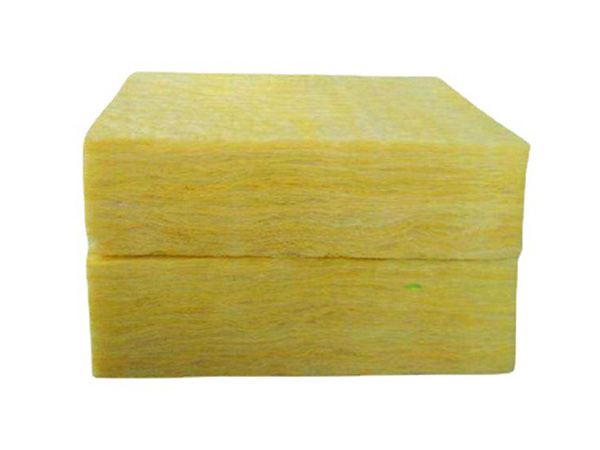
The conversion efficiency depends on the fiber diameter, fiber orientation, and binder distribution within the panel. Fine fibers (3-5 micron diameter) provide higher surface area per unit volume, increasing viscous interaction and improving absorption, particularly at mid and high frequencies. Quality glass wool acoustic panels use fibers of controlled diameter and optimized binder content (typically 2-4% by weight) to maximize acoustic performance while maintaining structural integrity.
Panel Density and Thickness Effects
Two primary physical parameters determine the acoustic performance of glass wool acoustic panels: density and thickness. Density affects flow resistance—the resistance to air movement through the panel. Optimal flow resistance depends on the target frequency range. Low frequencies (below 250 Hz) require higher flow resistance, achieved with higher-density panels (64-120 kg/m³). High frequencies (above 1000 Hz) are absorbed effectively even at lower densities (32-48 kg/m³).
Thickness determines the panel's ability to absorb low-frequency sound. Because low-frequency sound waves have long wavelengths (2.7 m at 125 Hz), the panel must be sufficiently thick to interact with a meaningful portion of the wave cycle. A general rule: effective low-frequency absorption requires panel thickness equal to at least 10% of the wavelength. For 125 Hz control, panels should be 50-100 mm thick. Glass wool acoustic panels thinner than 25 mm provide primarily high-frequency absorption.
Facing Materials and Their Acoustic Impact
Glass wool acoustic panels are available with various facing materials that affect both acoustic performance and suitability for the installation environment. Unfaced panels provide maximum sound absorption because the fibrous surface is fully exposed to incident sound. However, unfaced panels are unsuitable for areas where fiber erosion or visual appearance is a concern.
Perforated facings—aluminum, steel, or fiberglass tissue with 8-20% open area—maintain high absorption while protecting the fibrous core. The perforation size and open area percentage should be matched to the panel thickness and density: larger perforations (2-3 mm diameter) with higher open area preserve high-frequency absorption; smaller perforations may reflect high-frequency sound, reducing NRC by 0.05-0.15.
Micro-perforated facings without fibrous core material are an alternative technology, but for industrial noise control applications requiring meaningful low-frequency absorption, glass wool acoustic panels with properly selected perforated facings remain the most cost-effective solution.
Noise Reduction Coefficient (NRC) and STC Ratings
NRC (Noise Reduction Coefficient) measures sound absorption—the ability of glass wool acoustic panels to reduce reverberation within a space. STC (Sound Transmission Class) measures sound transmission loss—the ability of a partition or panel system to block sound from passing through to an adjacent space. These are distinct acoustic properties and should not be confused during specification.
Glass wool acoustic panels are absorptive treatments (high NRC, low STC). To block sound transmission, specify separate barrier materials (mass-loaded vinyl, gypsum board, concrete) in combination with glass wool acoustic panels as the absorptive layer within the cavity or as part of a composite wall/ceiling system. A common error is expecting acoustic panels alone to block noise from adjacent spaces—absorption reduces reverberation but does not prevent sound transmission through building elements.
Industrial and Commercial Applications
Glass wool acoustic panels are specified across diverse application types:
Mechanical equipment rooms: Reducing fan, pump, and compressor noise that would otherwise transmit to adjacent occupied spaces
Open-plan offices and call centers: Controlling speech reverberation to improve intelligibility and reduce distraction
Manufacturing facilities: Reducing overall noise levels to comply with occupational exposure limits
Auditoriums and conference rooms: Optimizing reverberation time for speech and music
Food processing and pharmaceutical facilities: Hygiene-compatible acoustic panels with non-shedding facings and cleanable surfaces
For each application, the panel specification should be based on a room acoustic analysis that considers room volume, surface area, existing reverberation time, and the target reverberation time for the intended use. Simply installing panels without analysis may result in under-performance or unnecessary cost.
Installation Methods and Performance
Correct installation is essential for glass wool acoustic panels to achieve rated NRC performance. Wall-mounted panels should be installed with the entire panel surface in full contact with the substrate or with an air gap of 50-100 mm behind the panel, which enhances low-frequency absorption. Ceiling-mounted panels (suspended or lay-in) should have minimal gaps at perimeter and junction details to prevent acoustic bypass.
When panels are installed with an air gap, the effective absorption at low frequencies increases because the air gap acts as a mechanical spring, improving the panel's interaction with long-wavelength sound. This principle allows thinner glass wool acoustic panels to achieve meaningful low-frequency absorption when installed with an appropriate air gap—a cost-effective strategy for large-area installations.
FAQ
Q1: What NRC rating should I specify for industrial equipment room acoustic panels?
A: Target NRC 0.85 or higher for equipment rooms. Glass wool acoustic panels with NRC 0.90-1.00 are recommended for rooms housing large compressors, turbines, or multiple noise sources where effective noise reduction is critical.
Q2: Can glass wool acoustic panels be used in high-humidity environments?
A: Yes, with appropriate facings. Specify glass wool acoustic panels with moisture-resistant binder systems and non-hygroscopic facings for swimming pools, food processing, and similar high-humidity applications. Verify product certification for the specific environmental conditions.
Q3: How many acoustic panels are needed for a given room?
A: Panel quantity depends on room volume, existing reverberation time, and target reverberation time. As a guideline, covering 30-60% of ceiling area and 20-40% of wall area with NRC 0.90 panels achieves meaningful noise reduction in most industrial and commercial spaces. Conduct a room acoustic analysis for precise sizing.
Q4: Do glass wool acoustic panels require maintenance?
A: Minimal. Vacuum clean exposed panel surfaces annually. Panels behind perforated facings require no maintenance. If panels become physically damaged or saturated with contaminants that cannot be removed, replacement is required to restore acoustic performance.
Q5: Are glass wool acoustic panels fire-safe?
A: Yes. Quality glass wool acoustic panels have non-combustible mineral fiber cores (A1 fire classification per EN 13501-1). Facings and edge treatments should also be selected for appropriate fire performance matching the application's fire safety requirements.
Conclusion
Glass wool acoustic panels work by converting sound energy to heat within their fibrous structure, with performance determined by fiber diameter, panel density, thickness, and facing selection. Correct specification requires matching these parameters to the frequency characteristics of the noise source and the acoustic goals of the space. When selected and installed correctly, glass wool acoustic panels provide durable, cost-effective noise control that significantly improves working and occupied space conditions.
References
1. ISO 354:2003, "Acoustics — Measurement of Sound Absorption in a Reverberation Room," International Organization for Standardization, Geneva, 2003.
2. ASTM C423-17, "Standard Test Method for Sound Absorption and Sound Absorption Coefficients by the Reverberation Room Method," ASTM International, West Conshohocken, PA, 2017.
3. EN 11654:1997, "Acoustics — Sound Absorbers for Use in Buildings — Rating of Sound Absorption," European Committee for Standardization, Brussels, 1997.
4. ASHRAE Handbook — HVAC Applications, Chapter 48: Sound and Vibration Control, American Society of Heating, Refrigerating and Air-Conditioning Engineers, Atlanta, GA, 2019.
5. Cox, T.J. and D'Antonio, P. (2004). "Acoustic Absorbers and Diffusers: Theory, Design and Application." Spon Press, London, UK, 2004.