



Soundproof insulation using glass wool is one of the most effective and economical methods for controlling noise in industrial, commercial, and mechanical applications. Unlike solid barriers that reflect sound, glass wool soundproof insulation absorbs acoustic energy within its fibrous structure, reducing reverberation, transmission, and radiated noise. This guide provides a technical assessment of glass wool acoustic effectiveness, the factors that influence sound absorption performance, and selection criteria for engineers specifying noise control solutions.
Acoustic Absorption Principles
Sound absorption occurs when acoustic energy enters a porous material and is converted to heat through viscous and thermal losses within the material's structure. Glass wool soundproof insulation is highly effective at this conversion because its open fibrous structure presents a large surface area to incident sound waves and provides a tortuous path that dissipates acoustic energy efficiently.
The key physical property governing absorption is flow resistance—the resistance to air movement through the material. Optimal flow resistance depends on the frequency of incident sound: low frequencies require higher flow resistance (achieved with higher density products) while high frequencies are effectively absorbed at lower flow resistance values. Quality glass wool soundproof insulation products are engineered with density and fiber diameter optimized for balanced performance across the frequency spectrum.
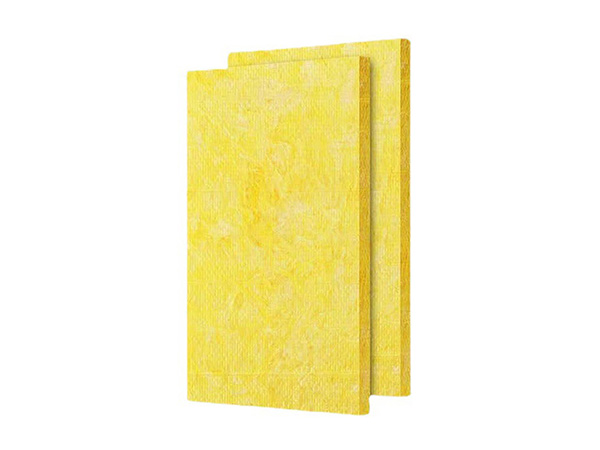
Noise Reduction Coefficient (NRC) Ratings
The Noise Reduction Coefficient (NRC) is the arithmetic average of sound absorption coefficients at 250, 500, 1000, and 2000 Hz, expressed as a single number between 0 and 1. Glass wool soundproof insulation products typically achieve NRC values of 0.80-1.05, meaning 80-105% of incident sound energy is absorbed across the tested frequency range.
For specification purposes, NRC values should be interpreted as follows: NRC 0.50-0.70 indicates moderate absorption suitable for general office and light industrial applications; NRC 0.75-0.90 indicates high absorption for mechanical equipment rooms and moderate industrial noise; NRC above 0.95 indicates premium absorption for critical acoustic environments such as recording studios, compressor enclosures, and turbine housings.
When comparing products, verify that NRC values are determined per ASTM C423 test methodology using the product's actual installed configuration including any facing materials, as facings can significantly affect high-frequency absorption performance.
Frequency-Dependent Performance
Glass wool soundproof insulation performance varies with frequency. Low-frequency sound (below 250 Hz) has long wavelengths that are not effectively absorbed by thin insulation layers—the insulation thickness should be at least 10% of the wavelength for meaningful low-frequency absorption. For 125 Hz noise (wavelength approximately 2.7 m), effective absorption requires 50-100 mm of glass wool insulation, with thicker products providing progressively better low-frequency control.
High-frequency sound (above 1000 Hz) is absorbed efficiently even by relatively thin glass wool soundproof insulation products. A 25 mm layer of high-density glass wool can achieve absorption coefficients above 0.8 at 2000 Hz and higher frequencies. This frequency-dependent performance is important when specifying glass wool for specific noise sources—low-frequency dominated noise (large fans, compressors) requires thicker, higher-density products than high-frequency dominated noise (pneumatic equipment, steam vents).
Mechanical Equipment Noise Control
Industrial facilities generate noise from multiple sources: rotating equipment (fans, pumps, compressors), fluid flow (piping, ductwork), and process operations (conveyors, mixers, screening equipment). Glass wool soundproof insulation is applied in these environments as equipment enclosures, in-duct silencers, and room acoustic treatment to reduce noise to acceptable levels.
Equipment enclosures using glass wool acoustic panels can achieve noise reduction of 15-30 dB(A) depending on enclosure design, panel thickness, and the frequency characteristics of the noise source. Effective enclosure design requires attention to air exchange for equipment cooling, access for maintenance, and structural isolation to prevent vibration transmission through the enclosure structure. Glass wool soundproof insulation alone cannot compensate for poor enclosure design—the panel must be installed on a sealed, vibration-isolated structure to achieve rated performance.
HVAC Noise Control Applications
HVAC systems are a major noise source in commercial and industrial buildings. Fan noise, air turbulence noise, and breakout noise through duct walls can all be controlled using glass wool soundproof insulation. Duct liner—glass wool board bonded to the interior duct surface—reduces fan noise propagating along the ductwork and breakout noise radiating through duct walls.
In-duct silencers using glass wool splitter elements achieve insertion loss of 10-25 dB across the frequency spectrum, with performance varying by silencer length, splitter thickness, and splitter spacing. Silencer specifications should be based on the octave band sound power level of the fan and the receiving space noise criteria (NC or RC rating). Overspecifying silencers adds unnecessary cost and static pressure penalty; underspecifying results in unacceptable noise levels that are expensive to correct after installation.
Installation Quality and Performance
The acoustic performance of glass wool soundproof insulation depends heavily on correct installation. Gaps, compression, and bridging (where the insulation is prevented from fully expanding to its design thickness) all reduce absorption effectiveness. For wall and ceiling applications, the insulation must be in full contact with the substrate across its entire area without voids or compression.
Facing materials can significantly affect high-frequency absorption. Faced products using impermeable facings (aluminum foil, vinyl) reflect high-frequency sound rather than absorbing it, reducing NRC by 0.10-0.25 compared to unfaced products. For acoustic applications, specify glass wool soundproof insulation with acoustically transparent facings (perforated aluminum, fiberglass tissue) or unfaced products where the facing is not required for vapor retarder or protection purposes.
FAQ
Q1: What thickness of glass wool is needed for effective soundproofing?
A: For general mechanical equipment noise control, 50 mm of glass wool soundproof insulation provides meaningful noise reduction. For low-frequency dominated noise, 75-100 mm thickness is recommended. Thickness requirements should be verified against the specific noise frequency spectrum and target noise reduction.
Q2: Does higher density glass wool provide better soundproofing?
A: Not necessarily. Higher density improves low-frequency absorption but may reduce high-frequency absorption if density becomes too high. Optimal density depends on the target frequency range. For broadband noise control, densities of 48-80 kg/m³ provide balanced performance.
Q3: Can glass wool soundproof insulation be used in outdoor applications?
A: Yes, with appropriate weather protection. Specify glass wool products with factory-applied waterproof facings and install with sealed joints and appropriate drainage to prevent moisture accumulation that would degrade acoustic performance.
Q4: How does glass wool compare to rock wool for acoustic insulation?
A: Both materials provide excellent acoustic absorption. Glass wool typically achieves slightly higher NRC values at lower densities, making it more cost-effective for many applications. Rock wool provides better performance in high-temperature and fire-rated acoustic applications.
Q5: What is the expected service life of glass wool acoustic insulation?
A: Properly installed and protected glass wool soundproof insulation has a service life exceeding 25 years. Degradation mechanisms include fiber settling in vertical applications, moisture absorption reducing flow resistance, and physical damage during maintenance access. Quality installation and appropriate facings/jacketing minimize these effects.
Conclusion
Glass wool soundproof insulation provides effective, economical, and durable noise control across a broad range of industrial and commercial applications. Understanding the frequency-dependent nature of acoustic absorption, selecting products with appropriate NRC ratings and density for the target noise spectrum, and ensuring quality installation are the key factors in achieving specified noise reduction targets. For critical acoustic applications, engage an acoustical consultant to verify that the proposed glass wool soundproof insulation specification delivers the required noise reduction across all relevant frequency bands.
References
1. ASTM C423-17, "Standard Test Method for Sound Absorption and Sound Absorption Coefficients by the Reverberation Room Method," ASTM International, West Conshohocken, PA, 2017.
2. ISO 354:2003, "Acoustics — Measurement of Sound Absorption in a Reverberation Room," International Organization for Standardization, Geneva, 2003.
3. ASHRAE Handbook — HVAC Applications, Chapter 48: Sound and Vibration Control, American Society of Heating, Refrigerating and Air-Conditioning Engineers, Atlanta, GA, 2019.
4. EN 11654:1997, "Acoustics — Sound Absorbers for Use in Buildings — Rating of Sound Absorption," European Committee for Standardization, Brussels, 1997.
5. Beranek, L.L. and Mellow, T.J. (2012). "Acoustics: Sound Fields and Transducers." Academic Press, Oxford, UK, 2012.