



Heating, ventilation, and air conditioning systems represent one of the largest energy end-use categories in commercial buildings, accounting for 30-50% of total building energy consumption. Effective HVAC insulation is critical for minimizing thermal losses in ductwork, pipework, and equipment, reducing energy costs, preventing condensation, and maintaining indoor air quality. Glass wool is the most widely specified insulation material for HVAC insulation applications due to its balanced combination of thermal resistance, acoustic performance, fire safety, and cost-effectiveness.
Why Glass Wool Dominates HVAC Insulation
Glass wool holds the largest market share in HVAC insulation applications for several compelling technical and commercial reasons. Its non-combustible fiber core (A1 fire classification) eliminates fire risk from heat sources and prevents flame spread along HVAC insulation runs. The fibrous open structure provides excellent acoustic absorption that reduces fan noise and vibration transmission through ductwork. Glass wool maintains stable thermal performance across the temperature ranges typical of HVAC systems, from chilled water at 4-8°C to hot water heating systems at 60-85°C.
Duct Insulation with Glass Wool
Air distribution ductwork is a primary application for HVAC insulation using glass wool. Uninsulated supply and return air ducts in unconditioned spaces lose 10-30% of thermal energy carried by the air stream before it reaches conditioned zones.
Duct liner involves bonding glass wool board to the interior surface of sheet metal ductwork using approved adhesive, providing both thermal resistance and acoustic absorption in a single product. Duct wrap involves wrapping glass wool blanket around exterior duct surfaces, which is more economical for large rectangular duct runs where acoustic absorption is less critical than thermal resistance. Minimum insulation thickness requirements for HVAC ductwork are specified in ASHRAE 90.1 and equivalent national energy standards—typical minimum thickness ranges from 25 mm to 75 mm depending on thermal requirements and space constraints.
Pipe Insulation for HVAC Systems
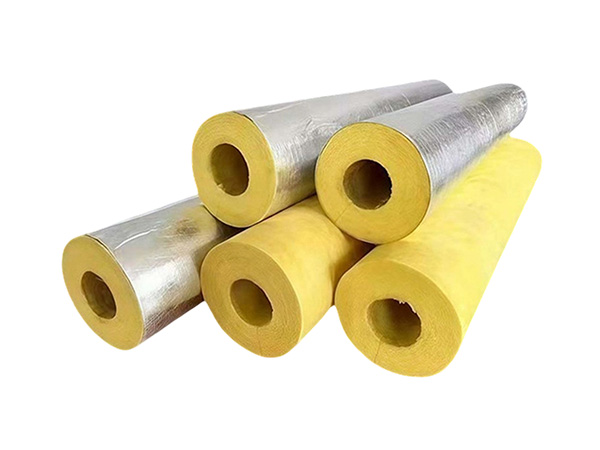
Chilled water, condenser water, and refrigerant suction piping in HVAC systems require continuous HVAC insulation to prevent condensation on cold surfaces and minimize thermal losses. Pre-formed glass wool pipe sections in standard sizes from 15 mm to 600 mm diameter cover the majority of HVAC pipework insulation requirements.
For chilled water at 7°C operating in a 24°C/50% RH environment, the minimum insulation thickness to prevent surface condensation ranges from 19 mm for small pipes to 38 mm for large pipes. Pre-formed glass wool pipe sections with factory-applied aluminum or PVC jacketing provide the fastest installation method, eliminating on-site cutting and fitting for straight runs and standard fittings.
Equipment Enclosures and Acoustic Treatment
Mechanical plant rooms, air handling units, and rooftop equipment generate noise that HVAC insulation with glass wool acoustic panels can control. Acoustic enclosure panels using high-density glass wool cores with protective facings absorb fan noise, compressor noise, and equipment vibration at source. Noise reduction targets for mechanical equipment rooms should be established during the acoustic design phase and verified through post-installation testing—typical acoustic enclosures achieve 15-25 dB(A) noise reduction when properly designed.
Refrigeration System Insulation
For HVAC insulation in refrigeration applications, rubber foam or phenolic foam products are generally preferred over glass wool for pipework insulation due to their closed-cell structure and superior moisture resistance. However, glass wool board and panel products are used extensively for cold store walls, ceilings, and floors where the combination of thermal resistance and acoustic absorption is required. Vapor retarder specification is critical for cold store HVAC insulation—install vapor retarder on the warm face of the insulation to prevent moisture diffusion into the cold insulation layer.
Installation Best Practices for HVAC Insulation
Quality HVAC insulation installation requires attention to detail at joints, transitions, and penetrations. Gaps exceeding 3 mm at insulation joints create significant thermal bypasses that can reduce effective insulation performance by 15-25% across the system. Seal all joints with approved duct sealant or tape before jacketing to ensure continuous thermal envelope. Support insulation at maximum 300 mm intervals on horizontal runs to prevent sagging and compression.
Conclusion
Glass wool HVAC insulation provides an effective, economical, and fire-safe solution for the thermal and acoustic management of heating, ventilation, and air conditioning systems. Systematic specification of the correct product type, density, thickness, and facing for each application—ductwork, pipework, or equipment—ensures that HVAC insulation performs reliably throughout the building's operational life.
References
1. NAIMA 1004-2018, "Fiber Glass Duct Liner Standard," North American Insulation Manufacturers Association, Arlington, VA, 2018.
2. ASTM C1290-21, "Standard Specification for Flexible Fibrous Glass Blanket Insulation Used to Externally Insulate HVAC Ducts," ASTM International, West Conshohocken, PA, 2021.
3. ASHRAE Handbook — HVAC Systems and Equipment, Chapter 16: Duct Construction, American Society of Heating, Refrigerating and Air-Conditioning Engineers, Atlanta, GA, 2020.
4. EN 14303:2009+A1:2013, "Thermal Insulating Products for Building Equipment and Industrial Installations — Factory Made Mineral Wool (MW) Products — Specification," European Committee for Standardization, Brussels, 2013.
5. CIBSE Guide F: Energy Efficiency in Buildings, Chartered Institution of Building Services Engineers, London, 2019.