



Selecting the correct glass wool board specification requires balancing thermal performance requirements, structural demands, fire ratings, acoustic needs, and budget constraints across diverse application types. A mis-specified glass wool board can result in condensation failures, premature replacement, or budget overruns that could have been avoided with systematic evaluation criteria. This guide provides engineers and procurement professionals with a practical framework for choosing glass wool board products that match project requirements precisely.
Understanding Glass Wool Board Density
Density is the primary performance variable in glass wool board specification and directly determines thermal conductivity, compressive strength, acoustic absorption, and cost. Glass wool boards are manufactured across a density range of approximately 24-150 kg/m³, with each density tier suited to different application requirements.
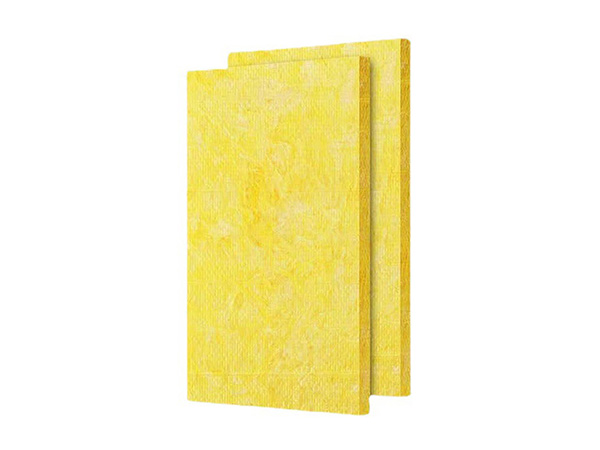
Low-density boards (24-48 kg/m³) are suitable for standard building applications where thermal resistance is the primary requirement and no significant mechanical loads are anticipated. Medium-density boards (48-80 kg/m³) provide a balanced combination of thermal performance, acoustic absorption, and moderate compressive resistance—these are the most versatile products in the glass wool board range. High-density boards (80-150 kg/m³) deliver enhanced compressive strength for load-bearing applications, improved acoustic performance at lower frequencies, and greater dimensional stability.
Thermal Performance Requirements
The required thermal resistance (R-value) drives glass wool board thickness specification. Calculate thickness by dividing the required R-value by the thermal conductivity of the selected product—typically 0.032-0.040 W/mK depending on density and temperature conditions.
ASHRAE 90.1 and local building energy codes establish minimum thermal resistance requirements for building envelope components in different climate zones. Verify project-specific requirements against applicable codes and energy standards before finalizing glass wool board thickness. Temperature-dependent thermal conductivity variations must be accounted for in high-temperature applications—at mean temperatures above 50°C, thermal conductivity increases by approximately 0.001-0.002 W/mK per 10°C rise.
Facing and Jacketing Options
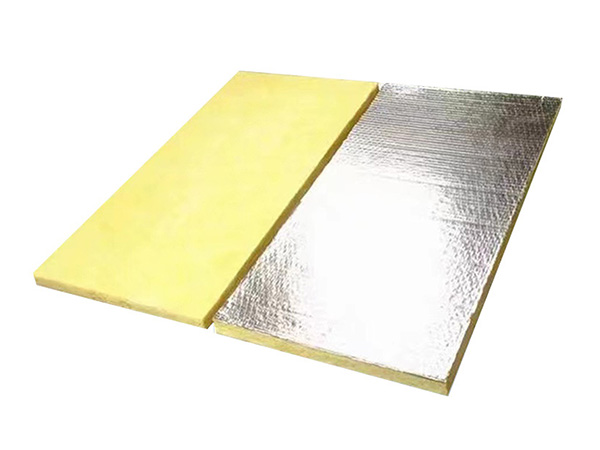
Glass wool boards are available with various facing materials that provide vapor retarder function, surface protection, and aesthetic finish. Aluminum foil facings provide vapor retarder function and are widely used in HVAC and building envelope applications. Reinforced foil facings offer enhanced durability during installation and service. White vinyl facings provide aesthetic finishes for visible installations in mechanical rooms. Mineral glass tissue facings offer compatibility with direct plaster or render finishes in external wall insulation systems.
Unfaced glass wool boards are used where separate vapor retarder systems are specified or where facing would interfere with the installation method. The facing selection should align with the application's moisture management strategy and environmental exposure conditions.
Fire Rating and Safety Standards
Glass wool board products are classified as non-combustible (A1) under EN 13501-1 when the facing material does not compromise the fire performance of the composite assembly. For applications in fire-rated wall or floor assemblies, the assembly fire rating depends on the complete construction including glass wool board and its facing. Request assembly fire test data or classification reports from manufacturers demonstrating compliance with the specific fire rating required.
Acoustic Performance Requirements
When acoustic absorption is a primary requirement alongside thermal performance, glass wool board specification should target density and thickness values optimized for the frequency range of concern. Higher density products provide superior low-frequency absorption; thicker products extend absorption to lower frequencies at any given density.
For HVAC duct lining applications where both thermal and acoustic performance are required, specify glass wool boards with acoustic-grade facing that allows sound energy to enter the insulation while protecting the fibrous core from air erosion.
Certification and Quality Assurance
Specify glass wool board products carrying third-party certification from recognized bodies such as CE marking (Europe), UL listing (North America), or equivalent regional certification marks. Request Declaration of Performance (DoP) documents for European projects and product data sheets confirming compliance with the applicable EN standard for the specific product type.
Conclusion
Choosing the right glass wool board requires systematic evaluation of density, thickness, facing, fire rating, acoustic requirements, and certification status. Using this framework to filter available products against project-specific requirements eliminates unsuitable specifications early in the design process and ensures that the selected glass wool board delivers reliable, cost-effective thermal and acoustic performance throughout its service life.
References
1. EN 13162:2012+A1:2015, "Thermal Insulation Products for Buildings — Factory Made Glass Wool (GW) Products — Specification," European Committee for Standardization, Brussels, 2015.
2. ASTM C612-14, "Standard Specification for Mineral Fiber Block and Board Thermal Insulation," ASTM International, West Conshohocken, PA, 2014.
3. ASHRAE Standard 90.1-2022, "Energy Standard for Buildings Except Low-Rise Residential Buildings," American Society of Heating, Refrigerating and Air-Conditioning Engineers, Atlanta, GA, 2022.
4. ISO 10456:2007, "Building Materials and Products — Hygrothermal Properties — Tabulated Design Values," International Organization for Standardization, Geneva, 2007.
5. CIBSE Guide F: Energy Efficiency in Buildings, Chartered Institution of Building Services Engineers, London, 2019.