



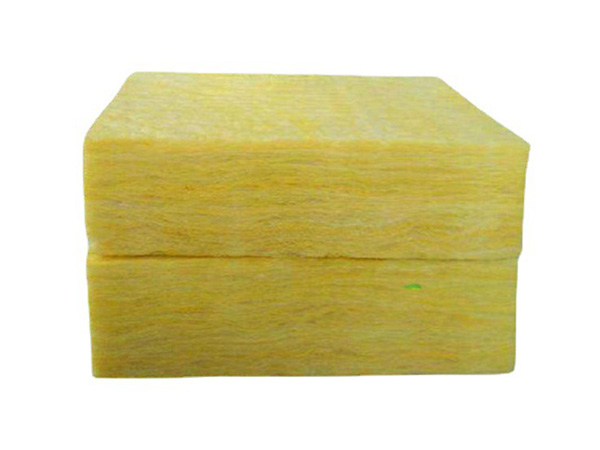
A glass wool blanket manufacturer can be your most valuable supply-chain partner or your most persistent source of quality problems. The product itself is deceptively simple: molten glass fiberized into fine filaments, bonded with a cured resin, and formed into a resilient blanket with a declared density and thermal performance. In practice, however, batch-to-batch consistency depends on dozens of process variables that are invisible to a buyer looking at a quotation sheet. This article is written for procurement managers, importers, and project buyers who want a practical, verifiable method for evaluating a glass wool blanket manufacturer before placing their first order.
Why the Choice of Manufacturer Determines Product Performance
Insulation failure rarely announces itself at delivery. It surfaces months later as higher-than-designed energy consumption, condensation stains on roof panels, or complaints from installation crews about dimensional inconsistency. The causes can usually be traced back to decisions made at the factory: fiber diameter variation that changes thermal conductivity, uneven binder distribution that causes the blanket to shed fiber during handling, or foil facing that delaminates after a few thermal cycles.
Two factories producing the "same" glass wool blanket can deliver measurably different products because of differences in raw material control, furnace stability, fiberizing technology, curing-oven profile, and laboratory verification. A reliable manufacturer is one that controls these variables systematically and can prove it with documents, process records, and test data. The evaluation framework below is designed around that principle.
Before You Ask for a Quotation: Define Your Specification
Manufacturers cannot evaluate you as a serious buyer if you cannot evaluate their product. Before contacting any factory, write down the specification you actually need:
Nominal density (kg/m³) — for example 16, 24, 32, or 48 kg/m³ depending on application.
Thickness and width/length (mm) — including whether you need rolls or boards cut to size.
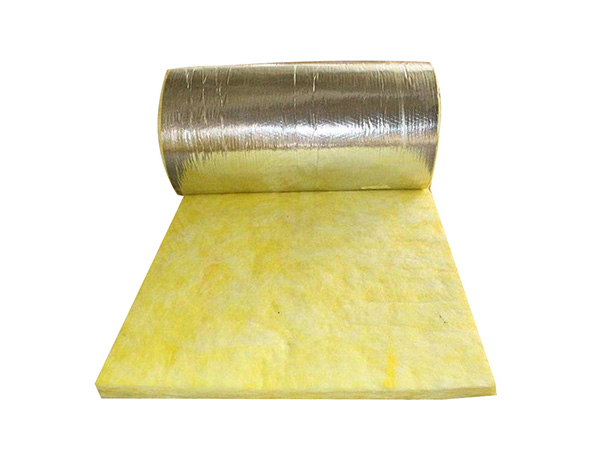
Facing type — plain, kraft paper, aluminum foil, reinforced foil, or mesh-reinforced foil.
Target thermal conductivity or declared R-value per the applicable standard.
Fire classification required by your destination market (for example A1 or A2 under EN 13501-1).
Binder system — phenolic or low-emission bio-based/acrylic binder if indoor air quality matters.
Packing and container-loading requirement, quantity, and delivery window.
Buyers who send this level of detail receive more accurate quotations and faster responses. Buyers who send only "please quote glass wool blanket" signal that they have not defined their own requirements, and serious factories will usually push back with clarifying questions before quoting.
Verify Manufacturing Capability, Not Just Trading Status
The first screening question is whether the company you are dealing with actually manufactures the product or merely trades it. A genuine glass wool blanket factory can be identified by asking about the production process rather than the price list. Useful questions include:
What melting technology is used for the glass batch, and what is the daily furnace output?
How is the fiber formed and collected, and what nominal fiber diameter range does the line produce?
Is the binder applied inline, and how is the curing oven temperature profile controlled?
Where are the lamination and slitting/converting lines located?
What is the maximum roll width the factory can produce or convert?
None of these questions requires proprietary information. A factory that answers them directly, with process descriptions and line photographs, is almost certainly a real producer. A company that can only discuss prices, minimum order quantities, and delivery times may be a trading intermediary — which is not automatically a problem, but it changes the risk profile of your supply chain, and you should know that before you commit.
Examine Quality Management and In-House Test Capability
Reliability is a function of process control, and process control is a function of measurement. Ask whether the manufacturer operates an in-house laboratory and which parameters it verifies on every production batch. The parameters that matter for a glass wool blanket are:
Thermal conductivity (measured on a guarded hot plate or heat-flow meter).
Density and density uniformity across the width of the blanket.
Thickness, width, and roll length tolerance.
Binder content and cure degree (affects odor, fiber shedding, and recovery).
Facing adhesion and, where relevant, water-vapor permeance of the faced product.
A factory operating under a documented quality management system (ISO 9001 is the common baseline) and able to show batch test records is inherently easier to audit than one that relies on the word of its production manager. If the manufacturer quotes a thermal conductivity value, ask how it was measured, on what equipment, and by whom. In-house screening measurements are normal; the values you rely on for design should be confirmed by accredited external laboratories.
Ask for the Documents That Match Your Destination Market
Test reports are only useful if they match the standard your project or market requires. A glass wool blanket manufacturer serving international buyers should be able to discuss product compliance against the relevant framework for your market:
Europe: EN 13162 product specification, fire classification per EN 13501-1, and CE marking documentation.
North America: ASTM C553 or ASTM C665 blanket specifications, and ASTM E84 surface burning characteristics where required.
China and other markets: GB/T 13350 or the local standard your project references.
Ask for the actual test report, not a summary page. Check the product name, density, thickness, tested parameters, test method, laboratory name, and date. A report that lists parameters you did not ask about, from an unidentifiable laboratory, is worth less than a clean, specific, dated report from a recognized testing body. If your application is indoor (for example, insulation exposed to occupied space), also request emission data for the binder system used.
Assess Facing and Converting Flexibility
Much of the value in a glass wool blanket order sits in the converting step: laminating the facing, slitting to width, cutting to length, and packing. Ask how the factory handles facing options and customization:
Which facings are laminated in-house: plain aluminum foil, reinforced foil, kraft, or composite?
Can the factory slit rolls to non-standard widths, and what tolerance does it hold?
Can it supply pre-cut lengths or die-cut shapes for duct or equipment insulation?
How is the facing edge sealed at the roll end to prevent moisture ingress during storage?
If your business depends on custom widths or fast re-supply of converted products, a factory with in-house lamination and slitting lines is more flexible and easier to work with than one that outsources converting to a third party.
Request Samples and Audit Them Like an Engineer
A sample is the cheapest insurance policy in industrial procurement — but only if you inspect it properly. When the sample arrives, check it against the datasheet rather than against your impression of what insulation should look like:
Weigh a cut piece of known area and confirm the actual density against the declared value.
Measure thickness at several points, including the edges and center of the sample.
Bend and compress the sample; a quality blanket should recover its thickness without permanent creasing.
Rub the surface and shake the sample: excessive fiber shedding indicates binder or fiber problems.
Check facing adhesion by peeling the foil; it should resist separation without tearing the fiber layer.
Smell the sample: a sharp chemical odor suggests incomplete curing of the binder.
A serious manufacturer will welcome this scrutiny. If a factory is unwilling to send samples, or sends samples that do not match its own datasheet, that single data point tells you most of what you need to know about the relationship.
Understand MOQ, Lead Time, and the Commercial Terms
Reliability includes commercial predictability. Before selecting a glass wool blanket manufacturer, establish the commercial parameters in writing:
Minimum order quantity for stock products and for custom-converted products.
Production lead time versus availability from stock, and how lead time is affected by container-load orders.
Payment terms and whether samples or pre-production rolls are charged.
How non-conforming product is handled: replacement, credit, or rework, and under what inspection criteria.
Whether the quoted price is firm for a defined validity period, given raw material (batch and resin) price movements.
None of these terms makes a manufacturer reliable by itself, but a factory that answers them clearly and keeps its word on small commitments — sample timing, document delivery, e-mail response — is far more likely to keep its word on large ones.
Red Flags When Evaluating Glass Wool Blanket Factories
A price dramatically below the market average for the same specification. Glass wool production has real raw-material and energy costs; an unsustainable price usually means an unsustainable specification.
No verifiable production address or refusal to arrange a factory visit or video audit.
Datasheets with no test method, no laboratory, and no date.
Inability to name the binder system or facing type used in the quoted product.
Pressure to pay in full before production, with no inspection or sampling stage.
FAQ
Q1: What information should I send to a glass wool blanket manufacturer to get an accurate quotation?
A: Send density, thickness, width and roll length, facing type, required thermal conductivity or R-value, fire classification for your market, quantity, packaging preference, and destination port or incoterm. The more complete the specification, the more accurate the quotation.
Q2: Which documents should I request before placing an order?
A: At minimum: a product datasheet, a third-party thermal conductivity test report, the fire classification certificate applicable to your market, and — for faced products — facing specification data. For EU projects, request CE marking documentation; for North America, request ASTM C553 or C665 compliance evidence.
Q3: How can I verify that the factory is a real manufacturer and not a trader?
A: Ask process-level questions about melting, fiberizing, binder application, curing, and converting lines; request line photographs or a video audit; and ask whether in-house lamination and slitting exist. A genuine producer answers these directly.
Q4: What is a typical minimum order quantity for glass wool blanket?
A: MOQs vary by factory and product. Standard rolls are often available from stock in modest quantities, while custom widths, densities, or converted products usually require larger volumes or production runs. Confirm MOQ in writing before design work begins.
Q5: Should I rely on the manufacturer's own test reports?
A: Use in-house reports for screening and batch consistency, but require accredited third-party test reports for the values that drive your design — thermal conductivity, fire classification, and, where relevant, vapor retarder performance.
Conclusion
Finding a reliable glass wool blanket manufacturer is not about finding the lowest quotation; it is about finding a factory whose process control, testing discipline, and commercial behavior you can verify. Define your specification first, screen for genuine manufacturing capability, examine quality management and laboratory evidence, request documents that match your destination market, audit samples like an engineer, and put the commercial terms in writing. A manufacturer that passes these checks is one you can build a multi-year supply relationship on — and in industrial insulation, the value of a consistent product delivered on schedule far exceeds the small price differences between quotations. For buyers starting this process, a useful first step is to review the product range and specification documents published by a short list of candidate factories — for example, the technical documentation available on glass wool blanket manufacturer websites — before requesting samples.
References
1. EN 13162:2012+A1:2015, "Thermal Insulation Products for Buildings — Factory Made Mineral Wool (MW) Products — Specification," European Committee for Standardization, Brussels.
2. ASTM C553-13, "Standard Specification for Mineral Fiber Blanket Thermal Insulation for Commercial and Industrial Applications," ASTM International, West Conshohocken, PA.
3. ASTM C665-17, "Standard Specification for Mineral-Fiber Blanket Thermal Insulation for Light Frame Construction and Manufactured Housing," ASTM International, West Conshohocken, PA.
4. GB/T 13350-2017, "Glass Wool and Its Products for Thermal Insulation," Standardization Administration of China, Beijing.
5. Papadopoulos, A.M. (2005). "State of the art in thermal insulation materials and aims for future developments." Energy and Buildings, 37(1), 77-86.