



Building owners, procurement managers, and specification engineers all need to understand the expected service life of insulation investments to make informed decisions about material selection, maintenance budgeting, and whole-life cost analysis. Rock wool insulation lifespan is one of the longest of any commonly used building insulation material, but actual performance duration depends heavily on correct specification, quality installation, and appropriate environmental conditions.
Expected Service Life of Rock Wool Insulation
Quality rock wool insulation installed correctly in building applications has an expected service life of 50 years or more under normal service conditions. This assessment is supported by field surveys of insulation removed from buildings after 30-50 years of service showing thermal performance within 5-10% of original values; manufacturers providing performance warranties of 25-50 years for their products; and building energy modeling assuming 50-year insulation service life as standard practice in life cycle cost analysis.
The mineral composition of rock wool—basalt, diabase, and other natural rock minerals—does not degrade from oxidation, UV exposure, or biological activity. Unlike organic insulation materials that can decompose, rot, or be consumed by pests over time, rock wool remains chemically inert and physically stable throughout its service life under normal conditions.
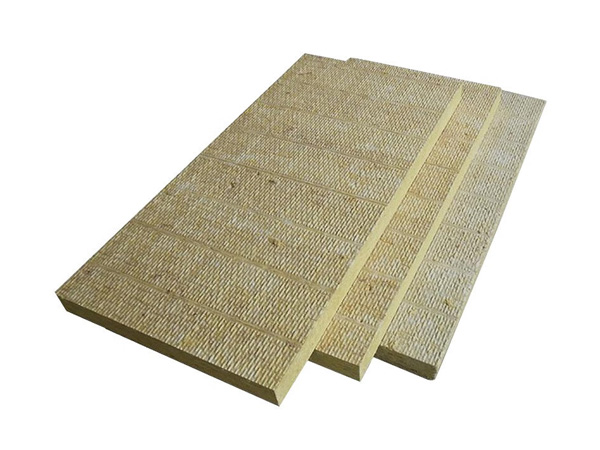
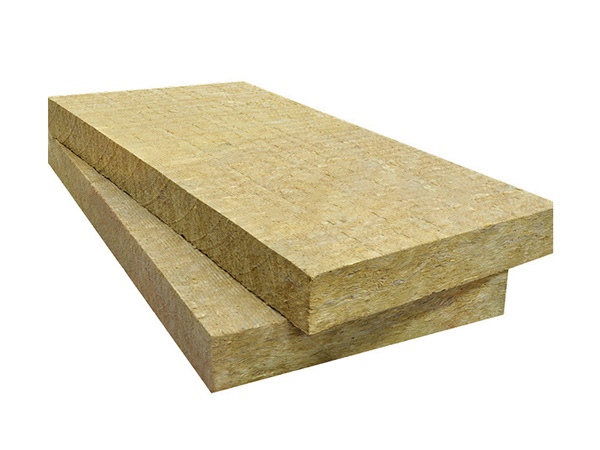
Factors That Can Reduce Rock Wool Insulation Lifespan
Despite its inherent durability, several factors can reduce rock wool insulation lifespan below theoretical maximum. Moisture penetration is the primary factor—while rock wool itself is hydrophobic, water can enter insulation systems through gaps, damaged joints, failed vapor retarders, or physical damage to jacketing systems. When water saturates rock wool, thermal conductivity increases significantly and the wet insulation may promote corrosion on adjacent metal substrates.
Physical compression beyond the material's elastic recovery capacity permanently reduces rock wool insulation thickness and thermal performance. Compression set testing per EN 1604 measures the percentage recovery after compression—quality rock wool products recover to 90-90% of original thickness after 10% compression deflection. Thermal cycling—repeated heating and cooling—can cause differential movement that stresses fixing systems and may create gaps at joints over very long periods.
Service Temperature and Thermal Stability
Rock wool insulation maintains stable thermal performance across its rated service temperature range without the binder burnout, fiber shrinkage, or performance degradation that limits glass wool at elevated temperatures. Standard rock wool products are rated for continuous service temperatures up to 650°C; high-temperature variants reach 750-1000°C. Within normal building temperature ranges (-30°C to +80°C), rock wool insulation thermal conductivity does not change significantly over time—this inherent thermal stability is a key contributor to rock wool insulation lifespan.
Fire Exposure and Post-Fire Performance
Rock wool insulation exposed to fire maintains structural integrity longer than most alternative insulation materials. Short-term low-temperature exposure (up to 30 minutes at 200-300°C) causes no significant degradation—the material cools and returns to original condition. Moderate fire exposure (30-120 minutes at 400-600°C) may fuse surface fibers slightly but the core material remains intact with 85-90% thermal performance retained. Severe fire exposure may require replacement, but rock wool does not melt and drip like glass wool or combust like plastic foam, reducing secondary fire spread risk.
Maintenance Practices to Extend Insulation Lifespan
Annual visual inspection of accessible insulation should check for physical damage, compression, moisture staining, and joint integrity. Post-installation documentation of insulation system locations, specifications, and as-built configurations enables targeted future maintenance. Repair identified damage promptly using manufacturer-approved materials and methods—small gaps or compression damage left unaddressed can lead to progressive moisture ingress.
Whole-Life Cost Analysis
The extended rock wool insulation lifespan contributes to favorable whole-life cost comparisons versus shorter-lived insulation materials. When total cost of ownership is calculated over 25, 40, or 50-year building life cycles, the initial material cost premium for rock wool is typically recovered through avoided replacement costs, consistent energy performance, and reduced maintenance requirements.
Conclusion
Rock wool insulation lifespan exceeding 50 years under normal service conditions, combined with its inherent thermal stability, fire resistance, and chemical durability, makes it one of the most reliable long-term insulation investments available. Building owners and engineers can specify rock wool with confidence that the insulation will deliver consistent thermal performance throughout the building's operational life with minimal maintenance intervention.
References
1. EN 1604:2013, "Thermal Insulating Products for Building Applications — Determination of Dimensional Stability under Specified Temperature and Humidity Conditions," European Committee for Standardization, Brussels, 2013.
2. TenWolde, A. and Carll, C. (2018). "Long-term performance of thermal insulation in buildings." Building and Environment, 142, 341-349.
3. ASHRAE Handbook — Fundamentals, Chapter 26: Insulation for Mechanical Systems, American Society of Heating, Refrigerating and Air-Conditioning Engineers, Atlanta, GA, 2021.
4. ISO 15686-1:2011, "Buildings and Constructed Assets — Service Life Planning — Part 1: General Principles," International Organization for Standardization, Geneva, 2011.
5. Ingalls, R.L. (2019). "Moisture degradation mechanisms in mineral wool insulation under field conditions." Journal of Building Physics, 43(4), 312-330.